

SECURITY OF NIGERIA REMAINS TOP PRIORITY AS PRESIDENT TINUBU DECLARES: “THE GENERATION OF JUNE 12 SECURED DEMOCRACY; OUR GENERATION MUST SECURE PROSPERITY”
By Emeka Amaefula
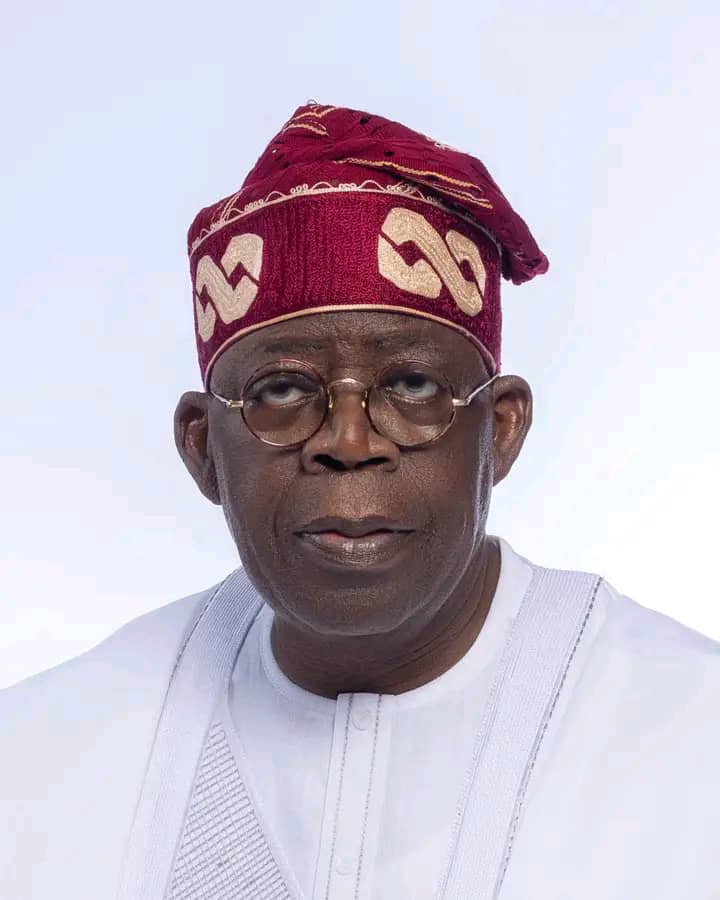
President Bola Ahmed Tinubu has reaffirmed the Federal Government’s commitment to securing Nigeria against terrorism, banditry, kidnapping, and other threats, declaring that democracy cannot thrive without a secure nation.
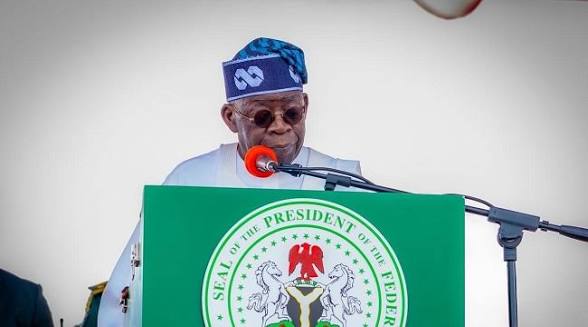
In his 2026 Democracy Day address to Nigerians on Friday, June 12, President Tinubu stated that while the heroes of June 12 fought for political freedom, the responsibility of the present generation is to consolidate democracy by ensuring security, economic stability, and prosperity for all citizens.
“Democracy without security is not solid enough,” the President said, noting that his administration had declared a security emergency and taken decisive measures to strengthen Nigeria’s security architecture.
He disclosed that the Federal Government had approved the recruitment of more than 50,000 new police officers alongside thousands of military personnel, while the 2026 national budget allocated N5.41 trillion to defence and security, describing it as the largest security allocation in the nation’s history.
President Tinubu said the government had continued to improve the capacity of the armed forces, police, and intelligence agencies in the fight against terrorism and criminal networks. He noted that Nigeria had moved beyond conventional military training with international partners, including the United States, France, and other European allies, to adopt more advanced precision-based operations.
According to him, security operations had recorded significant gains, including the degradation of an ISWAP command centre in Arege, Borno State. He added that terror-related deaths had reduced significantly since 2015, while more than 13,000 terrorists were neutralised within the past year.
The President also highlighted the role of the government’s non-kinetic approach, revealing that more than 124,000 fighters and their dependants had surrendered since 2023 through Operation Safe Corridor.
He warned bandits, kidnappers, and sponsors of terrorism that the Nigerian State would continue to pursue them relentlessly, urging those involved in criminal activities to surrender or face the full consequences of the law.
“Crime has no ethnicity. We must stand united and be assured that the enemies of our nation shall soon be history,” President Tinubu said, calling for national unity in confronting insecurity.
The President’s address came amid national concern over the abduction of children in Oyo and Borno States. He assured Nigerians that efforts were ongoing to secure their safe return and strengthen protection for communities across the country.
He praised the dedication of Nigeria’s armed forces, police officers, intelligence personnel, traditional rulers, religious leaders, and community stakeholders, acknowledging their contributions to peacebuilding and national security.
President Tinubu also paid tribute to the sacrifices of democracy activists, journalists, labour leaders, students, professionals, political leaders, and military officers who contributed to the restoration of democratic governance in Nigeria.
He described June 12 as a historic symbol of national unity, recalling the 1993 presidential election and the sacrifices of Chief M.K.O. Abiola, Alhaja Kudirat Abiola, Chief Gani Fawehinmi, Chief Bola Ige, Chief Alfred Rewane, Pa Abraham Adesanya, Chief Anthony Enahoro, and other democracy advocates.
According to him, the generation of June 12 secured democratic freedom, but the present generation must secure economic freedom and ensure that democracy translates into improved living standards for Nigerians.
The President linked national security to economic development, arguing that effective governance, stronger institutions, and grassroots development were essential in addressing the root causes of insecurity.
He stated that his administration had pursued reforms aimed at stabilising the economy, improving public finances, attracting investment, strengthening energy security, and creating opportunities for Nigerians.
President Tinubu noted that reforms in the electricity sector, including the signing of the Electricity Act, were designed to allow states greater participation in power generation, transmission, and distribution while addressing long-standing challenges in the sector.
He further stated that infrastructure development, agricultural expansion, industrial growth, technology investment, and improved local government administration were critical components of the Renewed Hope Agenda.
The President stressed that insecurity was partly linked to weaknesses in grassroots governance and expressed commitment to strengthening the autonomy and effectiveness of Nigeria’s 774 local government areas.
“Every generation has a defining responsibility. The generation of our founding fathers secured independence—the generation of June 12 secured democracy. Our generation must secure prosperity,” he said.
President Tinubu called on Nigerians to reject division and despair, urging citizens to embrace unity, hope, and confidence in building a stronger nation where justice, liberty, and opportunity are protected.
He concluded by honouring Nigeria’s democracy heroes and announcing national recognitions for individuals who endured persecution, imprisonment, exile, and hardship in the struggle for democratic freedoms.
The President assured Nigerians that his administration remained committed to defeating terrorism, protecting citizens, and building a secure and prosperous Nigeria where democracy delivers meaningful benefits to the people.
—– Emeka Amaefula —-+234(0)8111813069—-