


LATE BUNMI DUROJAIYE ‘S LEGACY LIVES ON AS LANDMARK ₦5 MILLION JUDGMENT AGAINST NUJ ENTERS ROCKY ENFORCEMENT STAGE
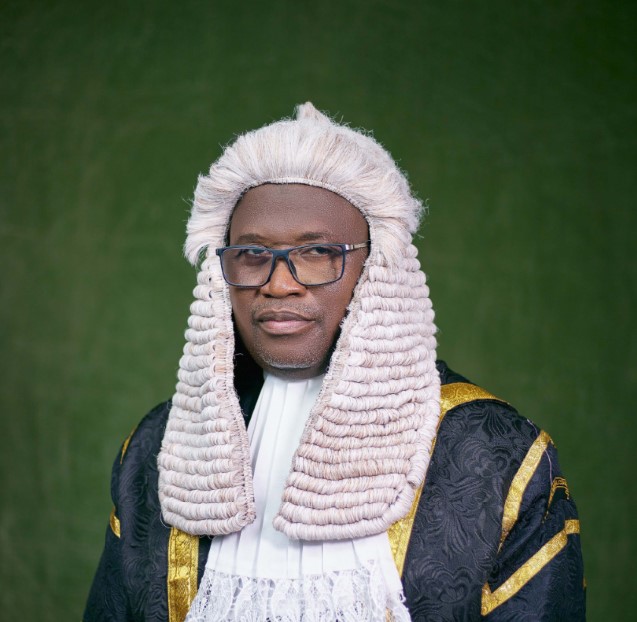
By Emeka Amaefula
With the expiration of the statutory 90-day period for filing an appeal against the judgment of the National Industrial Court of Nigeria (NICN), Port Harcourt Judicial Division, delivered on 4 May 2026, attention has shifted from the courtroom to enforcement of the Court’s orders against the Nigeria Union of Journalists (NUJ). The statutory period prescribed for filing an appeal to the Court of Appeal expired on 4 August 2026, marking the end of the ordinary appeal window provided by law, unless leave to appeal out of time is subsequently granted by the appellate court in appropriate circumstances.
The landmark judgment in Suit No. NICN/PHC/04/2018 — Mr. Akpekwu Christopher Imbufe & 4 Others v. Mr. Abduwahid Odusile & 8 Others — delivered by Hon. Justice Muhammad A. Hamza, brought to an end an eight-year legal battle arising from the 2018 Correspondents’ Chapel election in Rivers State. Widely regarded as one of the most significant judicial pronouncements on the interpretation of the Nigeria Union of Journalists (NUJ) Constitution in recent years, the judgment clarified the legal distinction between qualification for membership and eligibility to contest elective office within the Union, nullified unconstitutional disciplinary actions taken against the successful claimants and awarded them ₦5 million in damages and costs.
The suit challenged key provisions of the 2018 NUJ Constitution relating to membership qualification, eligibility to contest elections, suspension of members and the powers of the Union’s organs. After considering the pleadings, documentary evidence and oral testimony, the Court resolved most of the substantive issues in favour of the claimants, led by Mr. Akpekwu Christopher Imbufe, while determining certain election-eligibility issues in favour of the defendants. The Court consequently awarded ₦5 million in damages and costs, thereby creating a judgment debt enforceable against the judgment debtors unless lawfully stayed, varied or set aside by the Court of Appeal.
A central issue before the Court was the interpretation of Article 3 of the 2018 NUJ Constitution governing qualification for membership. Under the Constitution, the National Secretariat is required to process membership registration upon the recommendation of the relevant State Council. An applicant must possess at least a Diploma in Journalism or Mass Communication, or an equivalent diploma supported by cognate journalism experience from a recognised institution, together with a minimum of twelve months’ professional experience in a recognised media organisation.
These constitutional requirements substantially reflect the provisions of the Nigerian Press Council Act, 1992 (as amended). Section 37 defines a journalist as a person engaged in collecting, processing and disseminating information for publication and accredited by the Council. Section 19 prescribes the qualifications for registration, including recognised professional training, approved credentials and relevant experience, while preserving transitional rights for practitioners who had acquired at least five years’ experience before the Act came into force. The Act also requires applicants to satisfy standards relating to character, age, professional competence and knowledge of national affairs.
Similarly, the 2018 NUJ Constitution preserves the eligibility of journalists who had acquired five or more years’ professional experience before the commencement of the Act, provides for associate membership for veteran journalists and freelancers, and requires members to subscribe to the Constitution and the Code of Professional and Ethical Conduct before certification by the National Secretariat. It also empowers the Secretariat to revoke membership obtained through false information, professional misconduct or criminal conviction, subject to appeal to the National Executive Council, while expressly prohibiting discrimination on the grounds of sex, religion, political belief or ethnic origin.
One of the most significant legal principles established by the judgment was the clear distinction between qualification for membership under Article 3 of the 2018 NUJ Constitution and qualification to contest elective office under Article 6. The Court held that satisfying the constitutional requirements for membership does not automatically confer eligibility to contest elections within the Union. Justice Muhammad A. Hamza therefore examined separately whether the claimants satisfied the constitutional requirements for membership and whether they met the additional qualifications prescribed for the 2018 Correspondents’ Chapel election.

Although some of the claimants were found not to have satisfied the electoral qualification requirements under Article 6, the Court held that the disciplinary measures imposed on them lacked constitutional and legal foundation. Their suspensions were consequently declared unlawful and set aside. The Court further awarded ₦5 million in damages and costs, reaffirming the principle that disciplinary sanctions imposed outside the provisions of the Constitution cannot be sustained in law.
While the suit was pending, the Nigeria Union of Journalists amended its Constitution by raising the minimum educational qualification for membership from a Diploma to a Higher National Diploma (HND) or a Bachelor’s degree. Legal analysts have observed that the amendment cannot operate retrospectively. Consistent with settled principles of Nigerian law, Justice Hamza applied the 2018 Constitution, which was the applicable legal instrument at the time the cause of action arose and which reflected the qualification standards contained in Sections 19 and 37 of the Nigerian Press Council Act.
Attention has now shifted to enforcement of the ₦5 million judgment debt. Under Nigerian law, the monetary award constitutes a valid judgment debt rather than a voluntary payment or an ex gratia settlement. Consequently, the Nigeria Union of Journalists remains legally obligated to satisfy the judgment in full unless the successful litigants voluntarily agree to a lawful compromise or the Court of Appeal varies, stays or sets aside the judgment.
Following the visit of the National President of the Nigeria Union of Journalists, Comrade Alhassan Yahaya, to Rivers State, the successful claimants met on 29 July 2026 with the Chairman of the Rivers State Council, Paul Bazia Nasene; the Chairman of the Correspondents’ Chapel, Amaechi Okonkwo; and members of the Chapel Executive Committee.

During the meeting, the Union reportedly proposed implementing the judgment on conditions that included payment of ₦3 million instead of the ₦5 million awarded by the Court on the ground that the National Secretariat could only provide partial funding; requiring the suspended members to submit fresh credentials before registration or reinstatement; indicating an intention to appeal while requesting the claimants not to enter an appearance; forfeiture of allowances covering the period from January 2018 to April 2026; and consideration of compensation for deceased members. The Union expressed the hope that the successful litigants, popularly known as the Legacy Team of the Correspondents’ Chapel, would accept the proposed ₦3 million settlement.
As a matter of law, however, such proposals cannot bind the successful litigants unless accepted by all the judgment creditors. A judgment debtor has no legal authority to unilaterally alter, reduce or qualify the express orders of a court of competent jurisdiction. Likewise, any request requiring successful litigants to surrender rights already declared by the Court or refrain from defending an appeal has no legal effect unless mutually agreed by the parties or endorsed by the Court. Where reinstatement has been ordered, only reasonable administrative procedures necessary for implementing the judgment may lawfully be undertaken, and such procedures cannot be used to delay, frustrate or diminish rights already declared by the Court.

It is equally well settled that the mere filing of a Notice of Appeal does not operate as a stay of execution. Unless the Court of Appeal specifically grants an order staying execution, every judgment and order of the National Industrial Court remains valid, binding and enforceable. Consequently, the successful litigants remain entitled to commence enforcement proceedings to recover the ₦5 million judgment debt and compel compliance with every other order of the Court where voluntary compliance is not forthcoming.
Legal practitioners further observe that where a successful litigant dies before enforcement of a judgment is completed, the monetary benefits awarded by the Court ordinarily survive and may be recovered by the duly appointed personal representatives or administrators of the deceased’s estate in accordance with the applicable laws governing succession and estate administration. Accordingly, the death of a judgment creditor does not extinguish the estate’s legal entitlement to the fruits of a valid and subsisting judgment.
The decision of Hon. Justice Muhammad A. Hamza has therefore transcended the immediate dispute arising from the 2018 Correspondents’ Chapel election. It now stands as an important judicial authority on the interpretation of trade union constitutions, the distinction between qualification for membership and eligibility for elective office, the supremacy of constitutional provisions governing voluntary associations, and the obligation of professional bodies to obey valid and subsisting court judgments.

With the statutory 90-day period for filing an appeal having expired on 4 August 2026, and in the absence of any order of the Court of Appeal staying execution of the judgment, the orders of the National Industrial Court remain valid, binding and enforceable. Unless and until the judgment is varied or set aside by the Court of Appeal, or leave is granted to appeal out of time together with any consequential orders affecting enforcement, the ₦5 million award continues to subsist as a lawful and enforceable judgment debt against the judgment debtors.
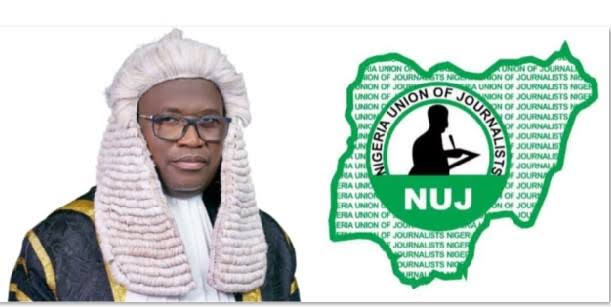
One of the successful claimants, the late Mrs. Bunmi Toki-Durojaiye, did not live to witness the enforcement stage of the landmark judgment. Although she passed away on 22 February 2023 before the Court delivered its decision on 4 May 2026, Nigerian law recognises that monetary entitlements arising from a valid judgment ordinarily survive the death of a successful litigant and may be pursued by the duly appointed personal representatives or administrators of the deceased’s estate, subject to the applicable laws governing succession and estate administration.
Before her death, Mrs. Bunmi Toki-Durojaiye distinguished herself as an accomplished media professional whose career reflected dedication, integrity and excellence in journalism. She graduated from the University of Jos with a Bachelor’s degree in English Language and Linguistics, obtained a Diploma in Law and later earned a Diploma in Media Studies from the National Open University of Nigeria.
Until her passing, she served as the Business Development Manager for Rivers State at Media Techniques Limited, publishers of City People Magazine, Lagos. Widely admired for her professionalism, diligence, commitment and exceptional interpersonal skills, she played a significant role in expanding the magazine’s business presence and visibility in Rivers State and beyond. Her unwavering commitment to quality journalism and media development contributed immensely to strengthening the reputation of City People Magazine as one of Nigeria’s foremost soft-sell publications.
Colleagues who worked closely with her remember her as a resourceful, dependable and compassionate professional who combined competence with humility and inspired younger journalists through her work ethic and dedication to excellence. Her contributions to the journalism profession remain enduring, while her legacy continues to inspire media practitioners across Nigeria.
As the enforcement phase of the landmark judgment unfolds, the case remains a defining judicial precedent on the governance of professional associations, the constitutional rights of union members and the inviolability of valid court judgments. It also serves as a reminder that organisations, irrespective of their status, are bound to comply with lawful judicial orders, thereby reinforcing the rule of law and strengthening public confidence in Nigeria’s justice system.
Emeka Amaefula
Journalist | Public Affairs Analyst
+234 (0) 811 181 3069