


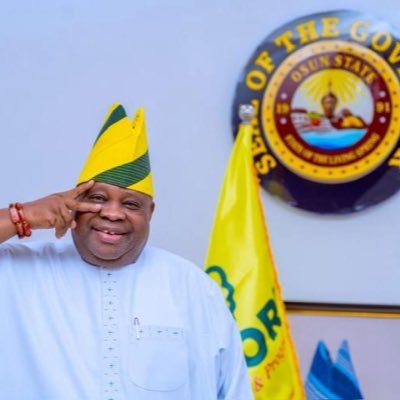
ADELEKE’S SECOND TERM: HOW THE ACCORD CANDIDATE SWEPT OSUN, DEFEATING OYEBAMIJI BY 66,252 VOTES
By Emeka Amaefula
The night was long in Osogbo.
Across Osun State, political camps waited anxiously as results from the 30 Local Government Areas trickled into the Independent National Electoral Commission (INEC) collation centre. Every figure changed the political arithmetic. Every local government result was greeted with cheers, silence or apprehension.
By the time the final figures were placed on the table, one story had become unmistakable: Governor Ademola Adeleke had secured another mandate from the people of Osun State.
Adeleke, flying the flag of the Accord Party, polled 511,067 votes to defeat his closest challenger, the All Progressives Congress (APC) candidate, Munirudeen Bola Oyebamiji, who scored 444,815 votes. The difference was 66,252 votes.

The African Democratic Congress (ADC) candidate, Dr. Najeem Folasayo Salaam, finished a distant third with 17,180 votes. INEC’s final collation showed Adeleke winning 19 of the 30 local government areas, while Oyebamiji carried 11 LGAs.
When the Returning Officer, Professor Joshua Ogunwole, eventually declared the result, the political suspense that had gripped the state gave way to celebration in the Adeleke camp.
Adeleke had done it again.
The governor’s victory was particularly significant because the election was not simply a contest between political parties; it was a battle over the future direction of Osun State and a test of Adeleke’s popularity after his first term.
The contest had three prominent faces.
There was the incumbent, Adeleke, seeking another term under the Accord Party. There was Oyebamiji, the APC standard-bearer, who entered the race with considerable political experience and the backing of the opposition machinery. Then there was Salaam of the ADC, a former Speaker of the Osun State House of Assembly, who sought to establish the ADC as a formidable alternative in the state.
But as the results accumulated, the election gradually became a two-horse race.
Adeleke’s support stretched across much of the state. He won key areas including Ede North, Ede South, Ife Central, Ife East, Ife North, Ilesa West, Iwo and Osogbo.
His strongest showing included 36,480 votes in Osogbo and 35,427 in Ede North, helping to build the statewide lead that ultimately carried him beyond the reach of his APC challenger.
Oyebamiji, however, did not surrender easily. The APC candidate demonstrated considerable strength in several local government areas, including Boripe, Ilesa East, Irewole, Obokun, Olorunda, Ife South and Atakunmosa East.
His most striking performance came in Irewole, where APC polled 29,972 votes, compared with Adeleke’s 10,934. In Olorunda, Oyebamiji also edged Adeleke, recording 24,671 votes against 23,514.
Yet the APC victories were not enough to overcome Adeleke’s accumulated advantage across the state.
The ADC’s Salaam, meanwhile, struggled to translate the party’s campaign momentum into a statewide breakthrough. His best performance among the published LGA figures came in Ejigbo, where ADC scored 5,053 votes. Ironically, even in Salaam’s local government, Adeleke emerged victorious with 18,458 votes, while Oyebamiji polled 16,195.
The final figures tell the story in stark terms:
Accord — Ademola Adeleke: 511,067 votes
APC — Bola Oyebamiji: 444,815 votes
ADC — Najeem Salaam: 17,180 votes
Adeleke’s victory margin was 66,252 votes.
The local government results reveal how the battle unfolded across Osun:
Local Government Area| Accord| ADC| APC| Winner
Aiyedaade| 16,681| 331| 15,719| Accord
Aiyedire| 11,073| 148| 9,910| Accord
Atakunmosa East| 7,872| 333| 9,936| APC
Atakunmosa West| 7,479| 213| 10,037| APC
Boluwaduro| 7,118| 179| 7,050| Accord
Boripe| 12,448| 379| 19,963| APC
Ede North| 35,427| 307| 10,283| Accord
Ede South| 26,188| 390| 6,219| Accord
Egbedore| 19,278| 363| 11,194| Accord
Ejigbo| 18,458| 5,053| 16,195| Accord
Ife Central| 21,171| 747| 15,913| Accord
Ife East| 27,201| 935| 18,600| Accord
Ife North| 13,879| 333| 9,613| Accord
Ife South| 13,507| 290| 14,678| APC
Ifedayo| 7,427| 115| 6,836| Accord
Ifelodun| 21,107| 509| 18,396| Accord
Ila| 16,211| 259| 12,934| Accord
Ilesa East| 12,280| 504| 16,208| APC
Ilesa West| 16,196| 673| 12,756| Accord
Irepodun| 14,504| 249| 15,713| APC
Irewole| 10,934| 275| 29,972| APC
Isokan| 13,765| 384| 14,063| APC
Iwo| 27,085| 588| 19,660| Accord
Obokun| 12,023| 205| 16,120| APC
Odo Otin| 18,003| 377| 15,435| Accord
Ola Oluwa| 10,163| 213| 10,782| APC
Olorunda| 23,514| 666| 24,671| APC
Oriade| 21,343| 423| 14,863| Accord
Orolu| 12,352| 236| 10,622| Accord
Osogbo| 36,480| 1,503| 30,474| Accord
TOTAL| 511,067| 17,180| 444,815| Accord
The numbers also exposed the geographical character of the contest. Adeleke’s strongest support came from several parts of Osun West and Osun East, while the APC maintained formidable pockets of support, particularly in areas where the party had traditionally enjoyed strong political structures.
The election was not without controversy.
Reports from polling units and observers indicated isolated incidents involving violence, vote-buying allegations, ballot-box disruption and technical difficulties with the Bimodal Voter Accreditation System (BVAS). There were also reports of disruptions in some locations, although the overall result was eventually collated across the 30 LGAs.
The political drama was heightened by the presence of several other candidates and parties in the race, but the final figures demonstrated the dominance of Accord, APC and ADC.
For Adeleke, the victory represents more than another electoral triumph. It is a renewed political mandate from the electorate and an opportunity to consolidate the programmes and policies of his first administration.
For Oyebamiji and the APC, the result represents a painful defeat but also confirms that the party retains substantial electoral strength across Osun. Its victory in 11 LGAs demonstrates that the opposition remains deeply rooted in parts of the state.
And for Salaam and the ADC, the 17,180 votes provide evidence of support but fall considerably short of the numbers required to challenge the two dominant forces.
As dawn broke over Osogbo and the final numbers settled into the official record, the political suspense was over.

The figures had spoken.
Ademola Adeleke had won 511,067 votes. Bola Oyebamiji had scored 444,815. Najeem Salaam had recorded 17,180.
And with a margin of 66,252 votes, the incumbent governor emerged from the August 15, 2026 contest as the man who will continue to occupy the Osun State Government House.
For Adeleke, the journey continues.
For Oyebamiji, the road back to political relevance begins again.
And for the people of Osun State, the real test now lies beyond the ballot box: what the renewed mandate will deliver in the years ahead.
— Emeka Amaefula —
+234 (0) 811 181 3069