

URUALLA RISING
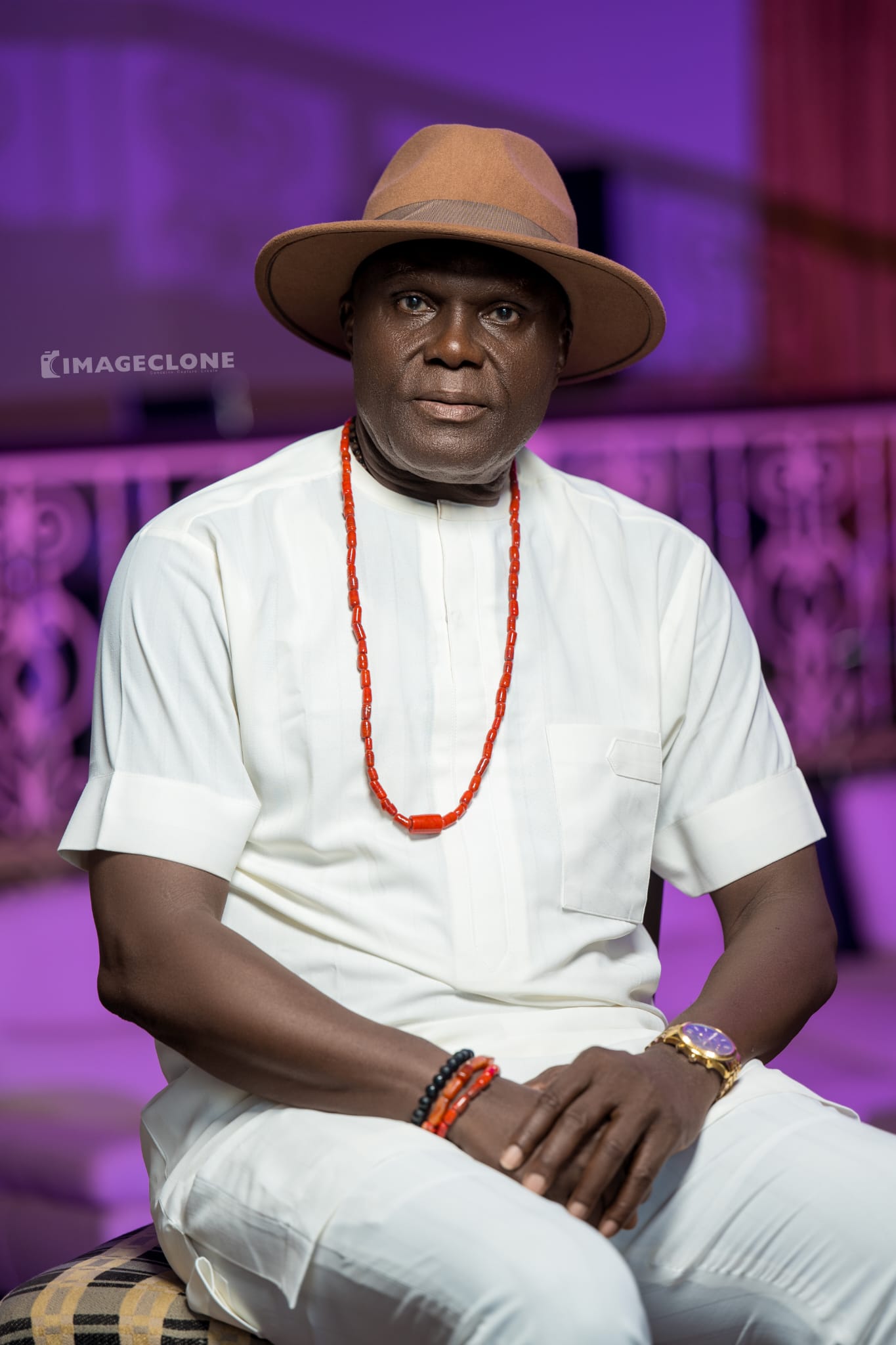
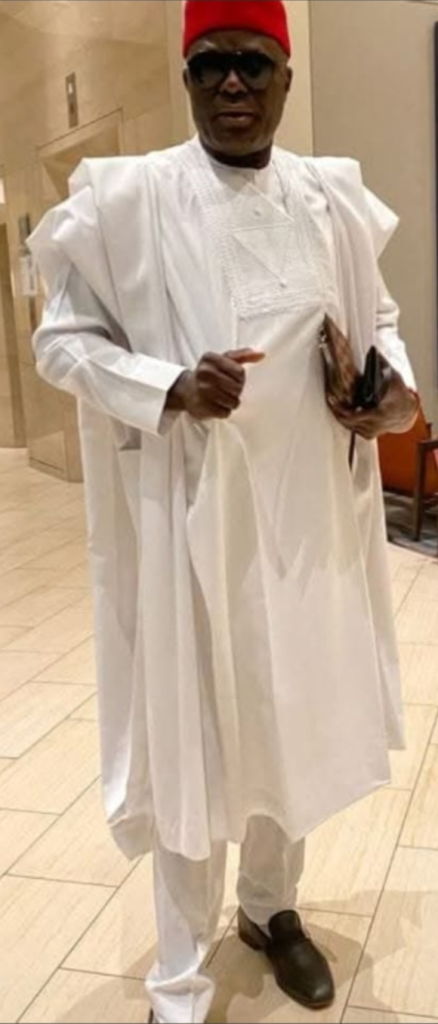
THE MAN, THE HOPE, THE DREAM, THE TRAIL BLAZER, THE CHAMPION, AND THE HERO — HIGH CHIEF AMBROSE NWOSU: TURNING COMMUNITY LEADERSHIP INTO DEVELOPMENT
The indefatigable leader driving a new development era through service, unity, personal sacrifice and the mobilisation of Urualla indigenes at home and abroad
By Azubuike Sam Onwumere
In an era when community leadership is increasingly judged by tangible results, transparency, accountability and the ability to unite people around a common purpose, High Chief Ambrose C. Nwosu, popularly known by his traditional title, Okaka 1 of Urualla, has emerged as a prominent figure in the contemporary development story of the ancient Urualla Mbiagu Clan in Ideato North Local Government Area of Imo State.
As President General of Urualla Mbiagu Clan, High Chief Nwosu leads a community with a distinguished history of administrators and community leaders who have contributed to its growth and development. Among the notable past Presidents General who are late include Francis Aneke, Chief Dennis Ndubuizu, Marcel Ibe, Luke Aguesiegbe, Alan Richard Dike, Silas Izugbokwe, Innocent Eze Ibekwe and J.B. Onyia, as well as living former Presidents Generals, including Sir Paulinus Achi, Barrister Evaristus Egbebu, Hyginus Onwuneme and Prof. Samuel Ezeanyika.
Building on this legacy, Nwosu has pursued a leadership philosophy centred on service, personal sacrifice, mobilisation and practical development. In about four years in office, his administration has been associated with a number of projects and initiatives, including solar-powered street lights, security cameras, improvements at the Civic Centre, community security arrangements, the recovery of an abandoned generator, the purchase of a new 35KVA generator now serving the Civic Centre, and the continued development of the ultra-modern Afor Iro Market stores.
The confidence surrounding his administration was further reflected in the community election of August 13, 2026, when Ambrose Chukwualuka Nwosu and members of his executive were returned without opposing nominations. The outcome marked another significant moment in the administration’s tenure and renewed its mandate to continue with its development agenda.
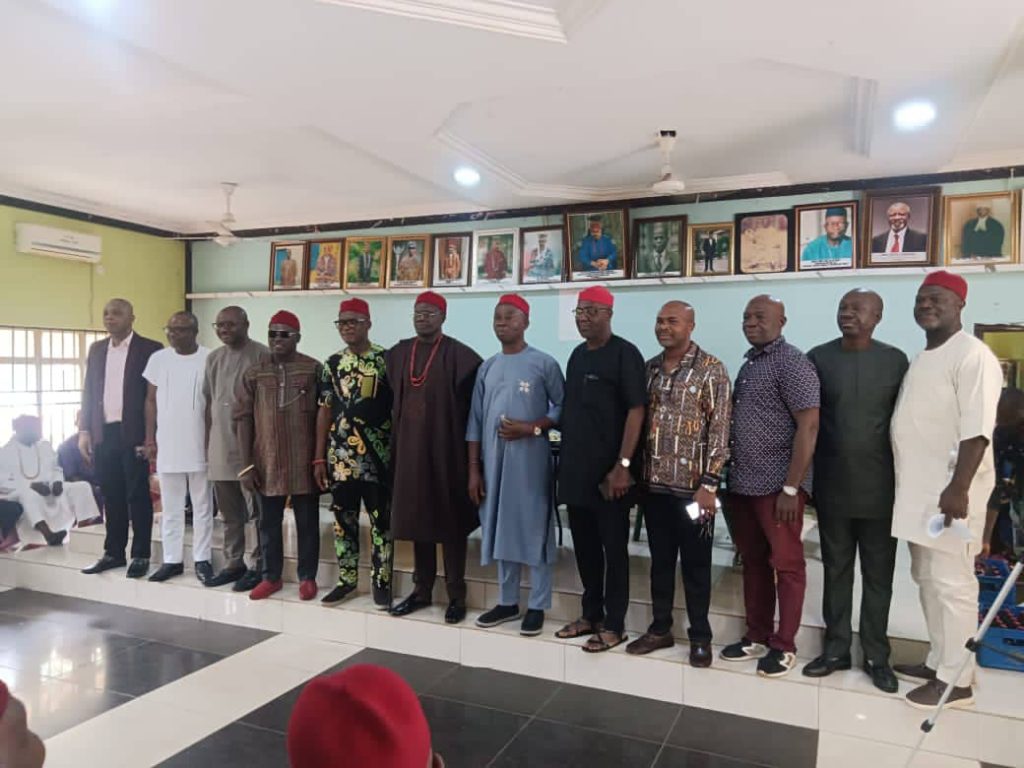
The executive team includes Chief Fabian Amunike, Vice President General; Chief Dr. Sixtus Ozuomba, Secretary; Chief Ben Ibebuogu, Treasurer; Chief Marcel Onyeaka, Welfare Officer; Chief Chimezie Ojiabo, Esq., Legal Adviser; Chief Tochukwu Agusiegbe, Financial Secretary; Pharm. Agughasi; and other members of the Executive Committee.
For supporters of the administration, the uncontested return of the executive was an indication of the confidence and goodwill that had developed around its leadership. Beyond the electoral process itself, it represented an opportunity for the team to consolidate ongoing initiatives and pursue further development.
The story of Urualla, however, stretches far beyond contemporary community politics. It is deeply rooted in the history, traditions, ancestry and cultural identity of the Igbo people.
Urualla Mbiagu is an ancient autochthonous Igbo community in Ideato North Local Government Area. According to the community’s historical account, its ancestry is traditionally traced to Mbiagu, a hunter-farmer who migrated from Achina in present-day Anambra State about a thousand years ago. The settlement became known as “Uru-ala,” a name associated with the productivity and richness of its land.
From Mbiagu’s four sons emerged the traditional villages of Ezemazu, Ozu, Ozuakoli and Umuago. Over generations, these communities developed within a traditional structure that preserved their common ancestry and identity.
At the centre of the traditional institution is the hereditary Okosisi Ezeanyika dynasty. The present traditional ruler is His Royal Majesty Nnabugo Okosisi Ezeanyika, Okosisi IV, Eze Urualla XII and Okpara Mbiagu, who oversees the traditional domain of Urualla Mbiagu Clan.
The clan comprises eight autonomous communities: Ezemazu, Umuezemazu, Ozu, Ozuomee, Ozuakoli, Umuakoli, Umuago and Umuago Ndida. Each autonomous community maintains its own traditional leadership structure. Within Urualla Clan, a Memorandum of Understanding (MoU) stipulates that Eze Urualla shall retain paramount status, bearing the title of Royal Majesty and exercising supreme traditional authority over Urualla Clan.
Each autonomous community has its own traditional leadership, while all remain within the traditional framework of the paramount institution headed by His Royal Majesty, Eze Urualla.
It is against this historical and cultural background that the emergence of High Chief Ambrose C. Nwosu as President General assumes particular significance. His leadership comes at a time when many traditional communities are seeking to preserve their heritage while simultaneously responding to modern demands for infrastructure, security, economic development and effective diaspora participation.
One of the distinctive features of Nwosu’s leadership has been his effort to strengthen the relationship between Urualla at home and Urualla indigenes scattered across the world. He has personally visited branches of the Urualla Mbiagu Clan Assembly in the United Kingdom, Ireland, China, Singapore, Australia, the United States, Germany, Malaysia, Japan and other locations across West Africa where Urualla indigenes reside.
Rather than relying exclusively on correspondence or intermediaries, he has travelled to meet members of the community, engage them directly and encourage greater participation in the affairs and development of their ancestral homeland.
His personal journey reflects many of the values he has brought into community leadership: enterprise, resilience, determination and an ability to build relationships.
Born into the family of the late Mazi Godwin Nwosu and Ezinne Alice Nwosu of Okoroegede, Amanato, Ozuakoli, Urualla, he began his formal education at St. Michael’s Primary School 1, Ozuakoli.
Beyond the classroom, the young Nwosu developed a passion for football and distinguished himself as a goalkeeper. His agility and ability between the goalposts earned him the nickname “Dagger Can Fly,” a sobriquet that would remain part of his youthful identity.
His transition from education into business began with his first apprenticeship under his elder brother, Tony Nwosu. That early experience provided him with practical exposure to commerce and the discipline required in business. He later proceeded to Lagos, where he came under the mentorship of Emmanuel Ekemezie and further developed the experience, discipline, business relationships and entrepreneurial skills that would eventually shape his career.
His journey reflected the traditional Igbo apprenticeship system, through which young people acquire practical business knowledge, discipline, networks and entrepreneurial experience before establishing independent enterprises.
His business career subsequently took him to Nnewi, where he rose to become a branch manager before eventually establishing himself as an international dealer in motorcycle and automobile spare parts. His commercial activities expanded beyond Nigeria, with business connections extending to parts of Asia and Europe.
Over time, his entrepreneurial interests diversified into several ventures, including Elosel Intercontinental, Crepower, an automobile battery business, and Rosat Global Concept, a company involved in premium building materials and roofing tiles.
The transition from a young apprentice learning the fundamentals of commerce to an international entrepreneur has become an important part of the personal story of the man who would eventually be entrusted with the leadership of his ancestral community.
Yet, beyond business and community administration, Nwosu has maintained a strong interest in sports and social activities. He is a keen lawn tennis player and has belonged to several sporting and social organisations. He has also served as First Vice President of Diamond Social Club.
He is happily married to his beautiful wife and greatest cheerleader and motivator, Lady Prisca Nwosu, née Ohanugo, who bears the traditional title of Ugosimba, and their marriage is blessed with wonderful, awesome and brilliant children.
Beyond his immediate family, High Chief Nwosu is also regarded by associates as a mentor whose influence has extended to many successful and prominent businessmen. There are numerous people he has mentored over the years, many of whom have gone on to establish successful business careers. However, he prefers that the individuals he has mentored should not be singled out or publicly mentioned, choosing instead to allow their achievements to speak for themselves.
But it is in community service that High Chief Nwosu has arguably written the most visible chapter of his public life.
Elected President General at a time when Urualla was seeking dedicated and development-oriented leadership, he brought to the position the experience of business, the discipline of organisation and a personal philosophy centred on service.
One of the defining features of his administration has been the mobilisation of Urualla indigenes outside the community.
His personal visits to diaspora branches have helped strengthen communication between those at home and those living abroad, while encouraging greater involvement in the affairs of the ancestral community. The strategy has placed emphasis on the idea that development should be a collective responsibility involving residents at home and indigenes across the world.
His administration has also emphasised accountability and responsible management of communal affairs. For his supporters, the willingness to combine public responsibility with personal commitment has contributed to the confidence surrounding his leadership.
The projects undertaken during his tenure provide another dimension to that leadership story.
Among the initiatives associated with his administration are the installation of solar-powered street lights embedded with security cameras at strategic locations within the community. At a time when security remains a major concern in many rural and semi-urban communities, the facilities have been presented as part of efforts to improve visibility, security awareness and the protection of lives and property.
The Civic Centre has also received considerable attention, including improvements, beautification and the provision of a borehole.
Another aspect of the administration’s record has been the recovery of an abandoned generator that had remained unused for a considerable period. In addition to recovering the abandoned facility, the administration also purchased a new 35KVA generator, which is now being used at the Civic Centre.
Security has equally received attention through the establishment of what has been described as a functional community security network and an organised vigilante structure, with the objective of strengthening local participation in maintaining peace and security.
The President General has also been associated with major interventions in public infrastructure. He initiated and completed the new Urualla Magistrate Court, adding an important justice infrastructure facility to the community.
He also influenced the complete reconstruction of the Urualla Police Station after the facility was gutted by fire in 2022. The intervention restored a critical security institution and reinforced the administration’s focus on infrastructure capable of serving the wider community.
Perhaps one of the more ambitious undertakings is the continuing development of the ultra-modern Afor Iro Market stores. The project represents an effort to strengthen commercial activity, provide improved facilities for traders and create a more organised economic environment.
For a community with a long history of commerce and interaction with neighbouring communities, modern market infrastructure carries significance beyond the physical structures. It has the potential to improve the trading environment, support local enterprise and provide a more organised space for economic activity.
Supporters of High Chief Nwosu maintain that a significant part of the progress recorded during his tenure has been influenced by his personal commitment and willingness to contribute time, energy and resources to communal causes. That commitment has also contributed to his image among admirers as a philanthropist and servant-leader.
Beyond individual projects, however, the larger question surrounding his tenure is how community leadership can evolve from the traditional exercise of authority into a sustainable instrument for collective development.
For Urualla, that challenge is particularly significant because the community possesses a rich traditional heritage that must coexist with the demands of modern infrastructure, security, economic development and diaspora engagement.
The role of a President General therefore extends beyond administrative responsibilities. It involves mobilising people, managing relationships, attracting support, encouraging diaspora participation, protecting communal interests and working alongside traditional institutions and other stakeholders.
High Chief Nwosu’s leadership has unfolded within that complex environment.
His emergence as President General around the same period as the community’s dynamic young Paramount Ruler has also brought renewed attention to the relationship between traditional authority and community administration, and to the shared responsibility of both institutions in advancing the interests of Urualla.
For the community, the enduring challenge remains how to translate its long history, human capital and extensive diaspora network into sustained development capable of benefiting present and future generations.
High Chief Ambrose C. Nwosu’s story is therefore not merely that of a businessman who became a community leader. It is also the story of an individual who moved from enterprise into public service and sought to apply the principles of mobilisation, organisation and personal commitment to the development of his ancestral community.
From his early years as the football goalkeeper known as “Dagger Can Fly,” through his apprenticeship under his elder brother, Tony Nwosu, his subsequent mentorship under Emmanuel Ekemezie, his rise as an international trader and the establishment of several enterprises, Nwosu has built a profile that now extends into community leadership.
As Okaka 1 of Urualla, he carries both a traditional title and a public responsibility. The expectations attached to that responsibility are considerable, particularly in a community with such a long history and strong traditional identity.
For his admirers, the solar-powered street lights, security cameras, improved Civic Centre, borehole, recovered generator, newly purchased 35KVA generator, community security network, Magistrate Court, reconstructed Police Station and Afor Iro Market development constitute visible signs of a leadership approach that places emphasis on action.
For the wider Urualla community, however, the more enduring test will be whether these initiatives can be sustained, expanded and institutionalised so that development continues beyond any individual administration.
What is evident is that High Chief Ambrose C. Nwosu has become a significant personality in the contemporary affairs of Urualla Mbiagu.
Through his business experience, community mobilisation, personal contributions and commitment to communal development, Okaka 1 of Urualla has established a leadership profile that continues to attract attention within and beyond his ancestral community.
In the continuing story of ancient Urualla, his administration now forms part of a new chapter—one in which history and tradition are being confronted with the demands of modern infrastructure, security, economic development and accountable community leadership.
And for a community whose name itself is associated with the richness of its land, the aspiration remains clear to preserve the heritage handed down from Mbiagu and his four sons, strengthen the institutions that have sustained Urualla through generations, and transform its human and material resources into a foundation for a more prosperous future for generations yet unborn.