

“LET’S BUILD NIGERIA”: OBI AND KWANKWASO GO TO TOWN HALL IN RIVERS
By Emeka Amaefula
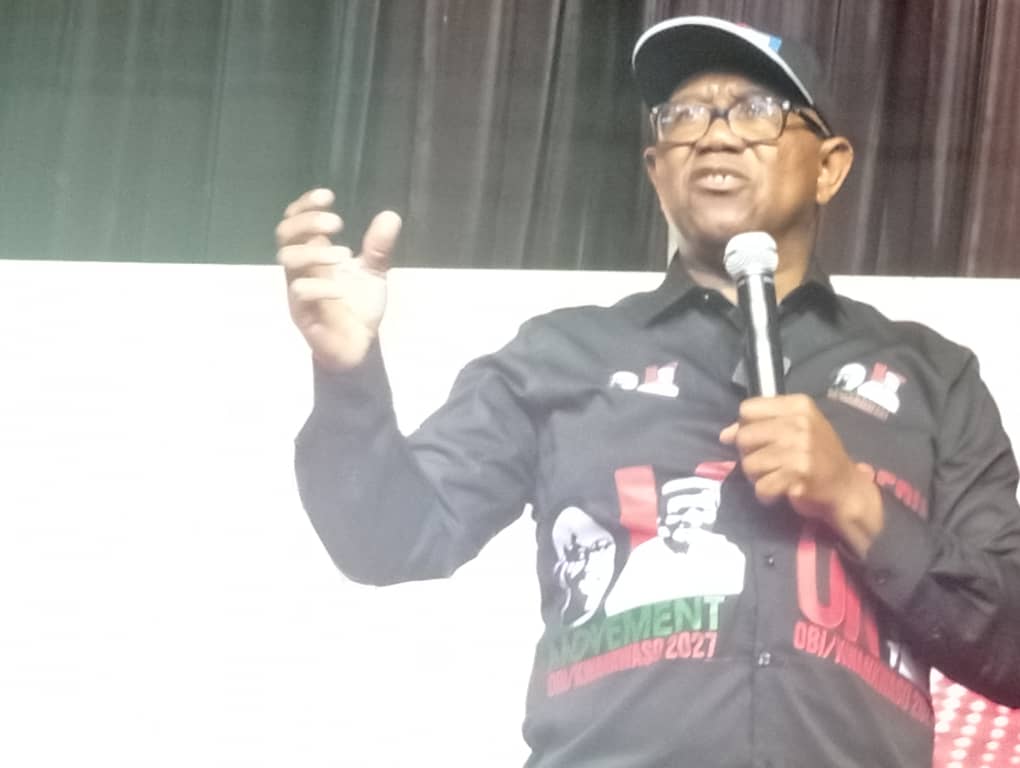
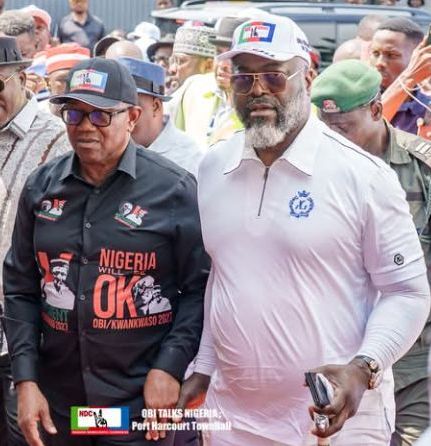
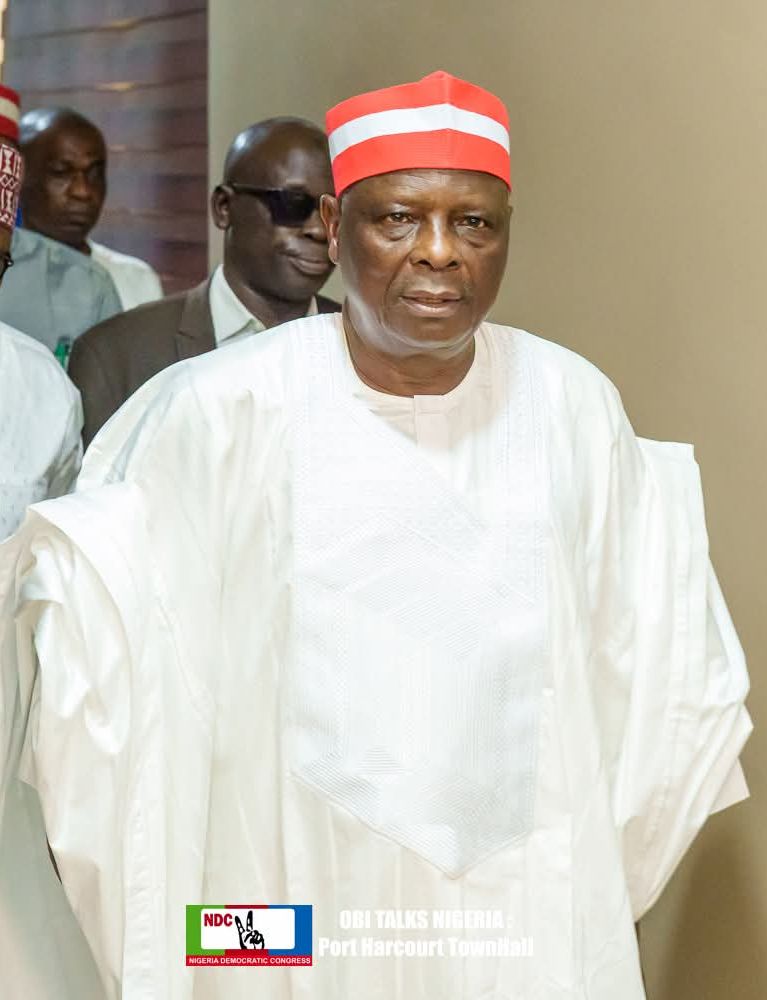
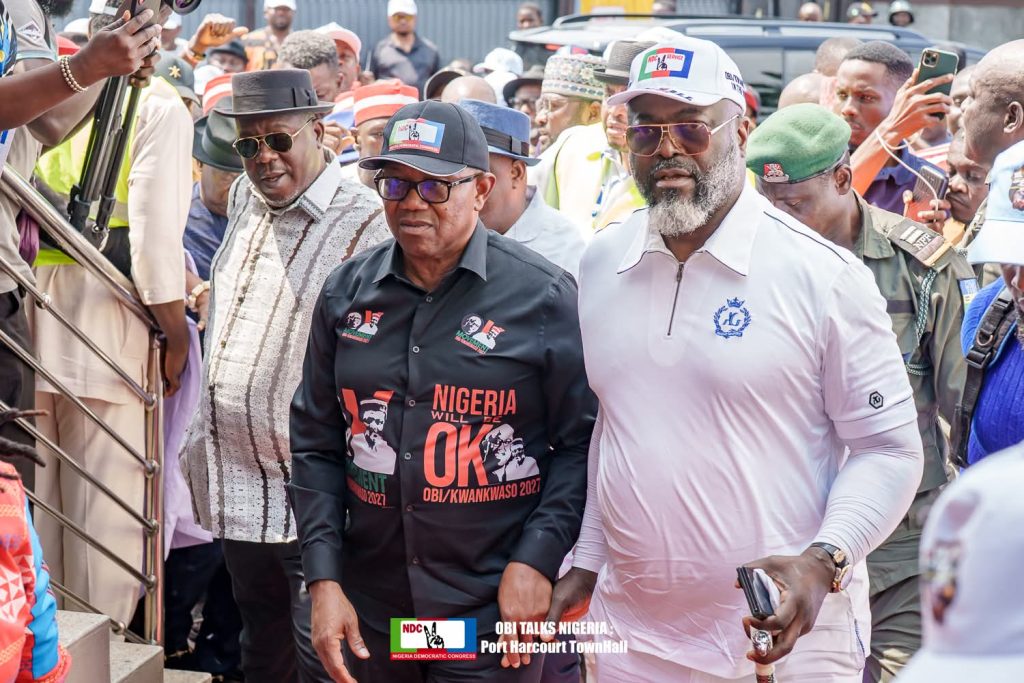
PORT HARCOURT — The political conversation around Nigeria’s 2027 presidential election took a distinctly grassroots dimension in Port Harcourt on Thursday, September 3, 2026, as the presidential and vice-presidential candidates of the Nigeria Democratic Congress (NDC), Peter Obi and Senator Rabiu Musa Kwankwaso, engaged Rivers State stakeholders and citizens in an open town-hall dialogue.
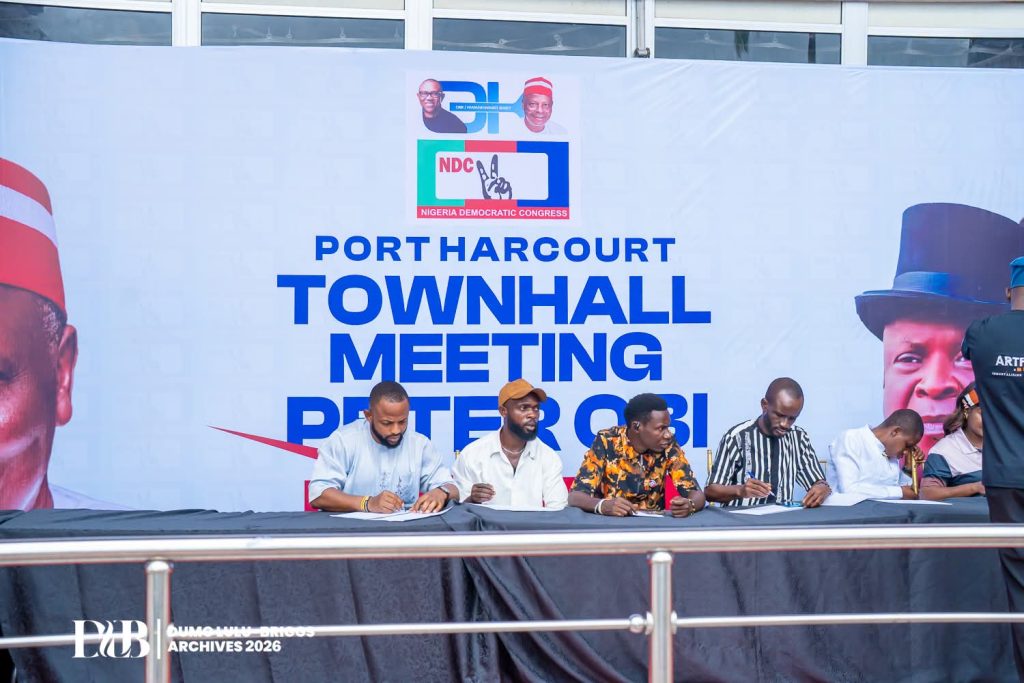
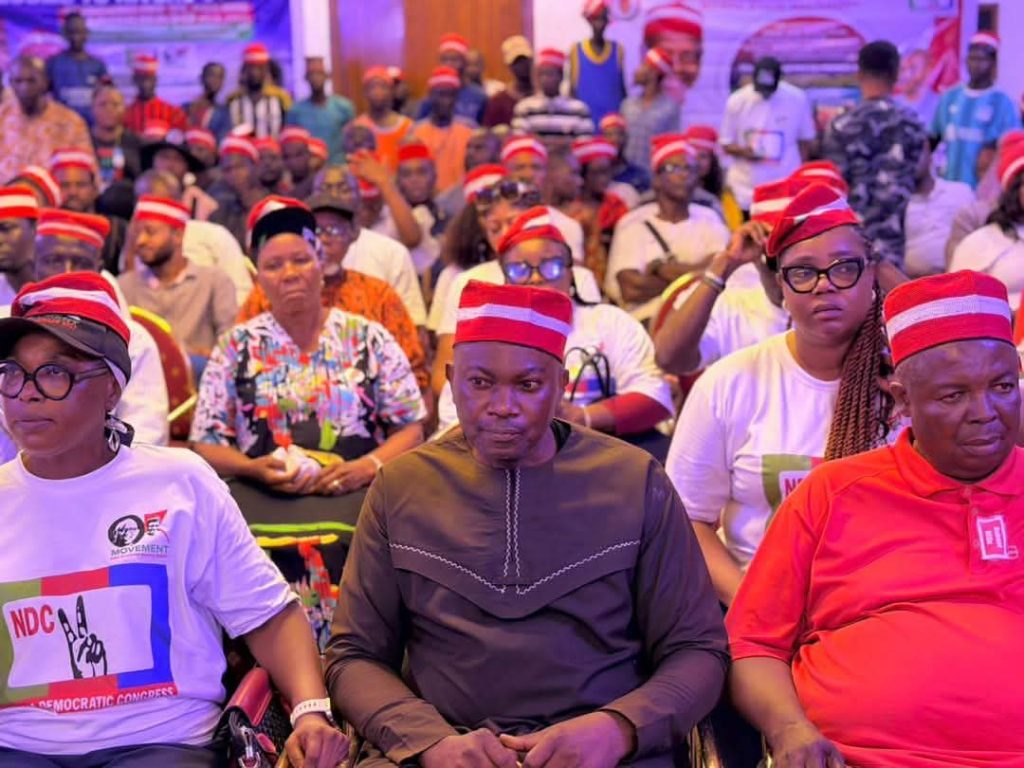
The event, tagged “OBI TALKS NIGERIA: A TOWN-HALL WITH PETER OBI,” was held at the EUI Event Centre, Port Harcourt, and provided a platform for direct interaction between the NDC presidential ticket, party leaders, political candidates, professionals, traditional rulers, community leaders, business interests, young people, women, civil society groups, the media and other stakeholders.
The atmosphere was one of expectation as participants gathered not merely to hear campaign speeches, but to ask questions and seek answers on some of the most pressing challenges confronting Nigeria.
Delivering the welcome address, the NDC 2027 Rivers State Governorship Candidate, Chief Dumo Lulu-Briggs, described the gathering as an opportunity for Nigerians to engage directly with those seeking to lead the country.
“It gives me great pleasure to welcome you to OBI TALKS NIGERIA: A TOWN-HALL WITH PETER OBI,” Lulu-Briggs said, as he welcomed Obi and Kwankwaso to Rivers State.
He also acknowledged the NDC National Chairman, Distinguished Senator Cleopas Moses Zuwogwe; the Rivers State Chairman, Hon. Success Jack; national and state party leaders; members of the Rivers State campaign structure; the NDC Deputy Governorship Candidate, Dr. Mike Nwalele; candidates for the Senate, House of Representatives and State House of Assembly; traditional rulers and community leaders, as well as professionals, business leaders, youths, women, civil society organisations and the media.
“Thank you all for being here, not simply to listen, but to participate,” he told the gathering.
According to him, the philosophy behind OBI TALKS NIGERIA was founded on the belief that some of Nigeria’s most difficult problems could become easier to solve when citizens and leaders were prepared to have the right conversations.
“Today, we want to ask honest questions, listen carefully and understand what leadership at the national level means in the everyday lives of our people,” he said.
“Our concerns are not abstract. They belong to our communities, our LGAs, our businesses, our schools, our families and our future.”
For Rivers State, Lulu-Briggs said, the town hall offered a rare opportunity to place the realities of the state and the wider Niger Delta directly before the presidential ticket seeking the mandate to govern Nigeria.
“We want to understand not only the national vision, but how that vision will translate to our people, our state, our communities and our local governments,” he said.
He explained that while he would raise questions from the perspective of Rivers State, other candidates would bring issues affecting their constituencies and sectors, with the floor also open to the press, professionals, organised groups and individual citizens.
“Our objective is not simply to talk. It is to understand. It is to challenge. It is to find solutions. And ultimately, it is to build a shared direction for Nigeria,” Lulu-Briggs said.
When Peter Obi eventually took the floor, the conversation shifted from political rhetoric to the economy, healthcare, agriculture, food security and the challenge of rebuilding Nigeria’s productive capacity.
During the question-and-answer session, Obi said that if he and Kwankwaso were elected in 2027, their administration would seek to fundamentally change the structure of the Nigerian economy by moving the country away from excessive consumption towards production.
He captured the philosophy in a simple phrase: “From Consumption to Production.”
Obi argued that Nigeria could no longer continue along a path in which the country depended excessively on imports while its productive sectors remained underdeveloped.
He said a productive economy would create jobs, strengthen local businesses, increase opportunities for farmers and ultimately improve the living conditions of Nigerians.
Healthcare, he said, would also occupy a central position in the proposed administration’s development agenda.
According to Obi, the government would prioritise primary healthcare and seek to establish or strengthen Primary Health Care Centres across Nigeria’s electoral wards, bringing basic medical services closer to ordinary Nigerians.
The proposed approach, he explained, would make healthcare more accessible at the grassroots, particularly for communities where residents often travel long distances before accessing basic medical attention.
Nigeria’s electoral structure comprises 8,809 Registration Areas/Electoral Wards across the 36 states and the Federal Capital Territory, with 774 local government areas and 176,846 polling units, according to INEC electoral data.
The scale of the proposed grassroots healthcare strategy therefore places the issue squarely within the everyday realities of communities across the federation, from Abia, Adamawa, Akwa Ibom and Anambra to Rivers, Sokoto, Taraba, Yobe and Zamfara, including the Federal Capital Territory.
Obi linked healthcare with another major pillar of his economic vision: agriculture.
Responding to questions from participants, he argued that with adequate healthcare and what he described as an agricultural revolution, Nigeria could produce enough food for its citizens while creating an economy in which farmers could make a living by producing and selling to the domestic market.
He maintained that agriculture, if properly organised and supported, could become a major source of employment and economic activity across rural communities.
The logic was straightforward: healthier Nigerians would be more productive, productive farmers would produce more food, increased agricultural production would create employment, and a stronger domestic production base would gradually reduce Nigeria’s dependence on imported goods.
“With this, insecurity in the country will be a thing of the past,” Obi said.
The movement from consumption to production consequently emerged as one of the defining messages of the town hall, tying together the issues of healthcare, agriculture, employment, food security and grassroots development.
Kwankwaso, who also addressed the gathering, turned attention to the political battle ahead and the question of whether incumbency could guarantee victory in the 2027 presidential election.
The NDC vice-presidential candidate argued that incumbency should not be mistaken for an automatic guarantee of electoral victory.
Drawing from his personal political experience, Kwankwaso recalled his 2003 experience, when he lost a re-election bid despite what he described as significant political statistics and support.
His point was that elections could produce outcomes that defied expectations, particularly when opposition forces built effective structures and connected directly with voters.
He therefore expressed the view that the incumbent President, Bola Ahmed Tinubu, could be defeated at the January 16, 2027 presidential election if the opposition succeeded in building a formidable political structure and effectively connecting with Nigerians across the country.
Beyond the politics of winning an election, Kwankwaso also stressed the importance of fundamental development and economic transformation, saying that government should focus on delivering tangible results rather than merely managing existing economic difficulties.
The town hall itself had begun with accreditation between 10:00 a.m. and 11:00 a.m., followed by the opening prayer and the National Anthem.
The programme, however, started later than scheduled because Peter Obi had earlier attended the Daily Times of Nigeria Newspapers anniversary celebration in Abuja on Thursday.
The Chairman’s Opening Address was followed by the National Party Chairman’s Address and goodwill messages from leaders, stakeholders and partners.
The Rivers State governorship candidate, Opuda Alabo Dumo Lulu-Briggs, subsequently delivered his address before the presidential candidate’s engagement with the audience.
But it was the Town Hall Dialogue — the question-and-answer session — that became the heart of the gathering.
For one hour, participants were expected to put their questions directly before the leadership of the NDC, with Obi taking the lead in responding.
It was an encounter that placed politicians, professionals, community leaders and ordinary citizens in the same room, with the issues of the day serving as the common ground.
At the conclusion of the engagement, Lulu-Briggs delivered the closing remarks and vote of thanks, returning to the central philosophy that had informed the gathering from the beginning.
He said the objective was not simply to talk, but to understand, challenge assumptions, find solutions and ultimately build a shared direction for Nigeria.
He expressed the hope that the conversations would eventually contribute to a policy communiqué reflecting the collective concerns, perspectives and aspirations of participants and serve as a meaningful reference for Nigeria’s future leadership.
“This is why OBI TALKS NIGERIA matters,” he said.
According to Lulu-Briggs, Nigeria may be one nation, but its realities are not identical. Every region, he said, must therefore have the opportunity to articulate its own concerns, priorities and possibilities.
“As conversations unfold across the six geopolitical zones, every region must have the opportunity to articulate its own concerns, priorities and possibilities. Today Rivers State has that opportunity,” he said.
He urged participants to open their minds, ask difficult questions and engage with the presidential ticket with respect and candour.
“We are not here to force a future on anyone. We are here to have the conversations that allow us to see that future more clearly,” he said.
For Lulu-Briggs, genuine political support should not be built merely around slogans or political pressure. It should emerge from citizens understanding the possibilities, examining the proposed solutions and determining whether they believe in the sincerity of those offering them.
The message of the gathering was ultimately captured in its official inscription:
“OBI TALKS NIGERIA.
LET’S BUILD NIGERIA.”
And beneath it, a simple but ambitious declaration:
“Nigeria can work.
Nigeria must work.”
— Emeka Amaefula—-+234(0)8111813069–