
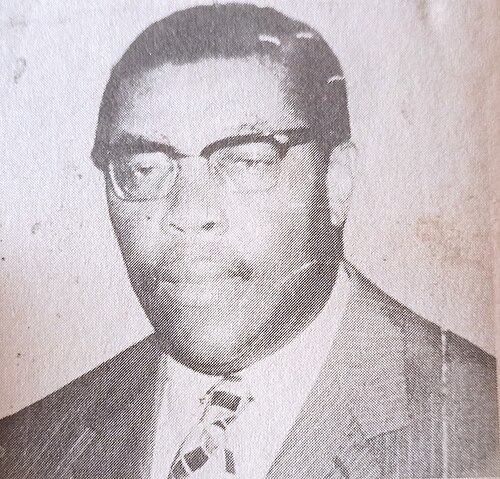
ALABO (DR.) NABO GRAHAM-DOUGLAS (SAN): NIGERIA’S YOUNGEST AND LONGEST-SERVING ATTORNEY-GENERAL WHO SERVED THREE GOVERNMENTS WITH UNBROKEN DISTINCTION
By Emeka Amaefula
In the illustrious annals of Nigeria’s legal and political history, few names command as much admiration and reverence as Alabo (Dr.) Nabo Graham-Douglas (SAN) — the Kalabari-born legal titan whose brilliance, patriotism, and integrity defined an era. Born on 15 July 1926, he grew to become Nigeria’s youngest and longest-serving Attorney-General, a man whose towering intellect and national service spanned both regional and federal levels under three different governments — a record that remains unmatched to this day.
Graham-Douglas was not merely a lawyer; he was a symbol of refined scholarship and courage, whose commitment to justice never wavered even in the face of political turbulence. His journey through public life reflected the soul of a nation struggling to define itself in the aftermath of colonialism and civil conflict.
He first made history as Attorney-General of the Eastern Region before the Nigerian Civil War. In that volatile period, his sense of principle and fairness often placed him at odds with the political leadership. His disagreement with the then Military Governor, Lt. Col. Chukwuemeka Odumegwu Ojukwu, led to his resignation — a decision that underlined his uncompromising devotion to the rule of law and constitutional order. During an Executive Cabinet meeting with Navy Commodore Alfred Diete-Spiff, the then Military Governor of Rivers State then presiding, Dr. Alabo NEBO GRAHAM DOUGLAS forced the Military Governor to apologize to the Cabinet members after the speech by Ken Saro- Wiwa was made during deliberations. Such was the power and influence of Commissioner of Justice and Attorney General of Rivers State Dr. Alabo NEBO GRAHAM DOUGLAS whose height of 7ft and 5″ was intimidating but filled with intelligence and personal aura.
Undeterred, his brilliance and integrity soon earned him another call to service. After the creation of Rivers State, the state’s first Military Governor, Lt. Cmdr. Alfred Papapreye Diete-Spiff, appointed him Attorney-General and Commissioner for Justice. In that role, Graham-Douglas became a foundational figure in shaping the young state’s legal system. He helped draft key laws and policies that guided Rivers State through the difficult years of post-war reconstruction and governance.
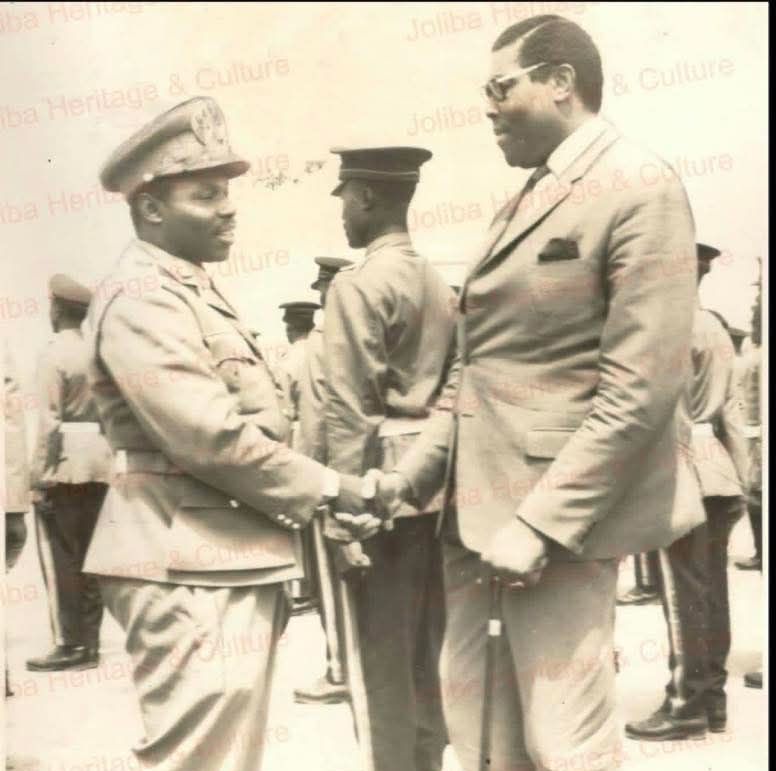
By 1971, his reputation had spread far beyond the boundaries of the Niger Delta. Recognizing his unmatched intellect and legal craftsmanship, General Yakubu Gowon, then Nigeria’s Head of State, headhunted him to serve as the Federal Attorney-General and Minister of Justice. At the national stage, Alabo Nabo Graham-Douglas became one of the most influential legal minds of his generation. He advised the government on critical constitutional and judicial matters, upholding national unity while promoting fairness and reform within Nigeria’s growing legal framework.
His tenure in the Federal Executive Council between 1971 and 1975 was marked by clarity, composure, and competence — qualities that earned him respect even among political opponents. When the July 1975 coup brought General Murtala Mohammed to power, Graham-Douglas quietly bowed out of office and returned to private legal practice, leaving behind an indelible record of selfless service.
He attended Nyemoni Primary school Abonnema and Kalabari National College Buguma. With his brilliance he was admitted to study Law at Exeter University England and later he studied at Kings College University of London followed by his professional advance legal studies in London where he was called to Bar on 23rd of November, 1954.
Until his death at the age of 57 years on 18 December 1983, Dr. Nabo Graham-Douglas continued to practice law with grace and dignity. His chambers at Nzimiro Street, Amadi Flats, Old GRA, Port Harcourt, still stands today — its signage post a silent witness to the presence of a man whose intellect once illuminated Nigeria’s legal landscape. To this day, that building remains a landmark of memory, symbolizing the enduring legacy of a jurist who lived and worked for justice.
In recognition of his monumental contributions, the Nigerian Law School, Port Harcourt Campus, was named in his honour — The Dr. Nabo Graham-Douglas Campus. Every new generation of Nigerian lawyers who pass through its gates carries a fragment of his legacy, learning within an institution that bears the name of a man who defined excellence and integrity in law.
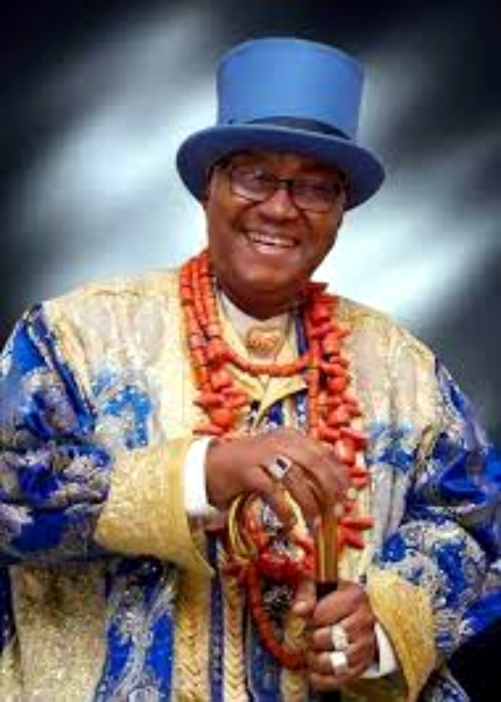
Beyond his personal accomplishments, Graham-Douglas came from a family steeped in service. His younger brother, Alabo Tonye Graham-Douglas, also made history as a four-time Federal Minister under various administrations before his passing, extending the family’s enduring tradition of leadership and patriotism.
Alabo (Dr.) Nabo Graham-Douglas (SAN) stands forever as a monument in Nigeria’s legal and political consciousness — a man of intellect, humility, and unwavering devotion to justice. His story is not just one of personal triumph, but a reflection of Nigeria’s journey toward nationhood and moral leadership.
Today, as the echoes of his achievements still resound through the halls of justice, one truth remains certain — Alabo Nabo Graham-Douglas lived and served as a man far ahead of his time. His name remains etched in the granite of Nigeria’s legal history, and his spirit endures in every courtroom where justice is served.
———-Emeka Amaefula —–+234(0)8111813069—