


By Emeka Amaefula
WHEN POWER BLINKS: THE DAY NIGERIA’S CONSTITUTION FORCED AN IMPEACHMENT TO FREEZE IN RIVERS STATE
Early January 2026. Rivers State hums with the old rhythm of Nigerian power plays. Twenty-seven lawmakers, orbiting the gravitational pull of a former governor now entrenched in Abuja as FCT Minister, file into the Rivers State House of Assembly. Speaker Martin Amaewhule calls the session.
Resolutions fly: gross misconduct—budget violations, failure to present the 2026 appropriation bill, unapproved spending—against Governor Siminalayi Fubara and Deputy Prof. Ngozi Nma Odu. The impeachment engine ignites under Section 188 of the 1999 Constitution.
The path is scripted: transmit the notice and articles to the Chief Judge. He forms a seven-member investigative panel. Trial ensues. Removal, if the votes hold.
But the script fractures before the ink dries.
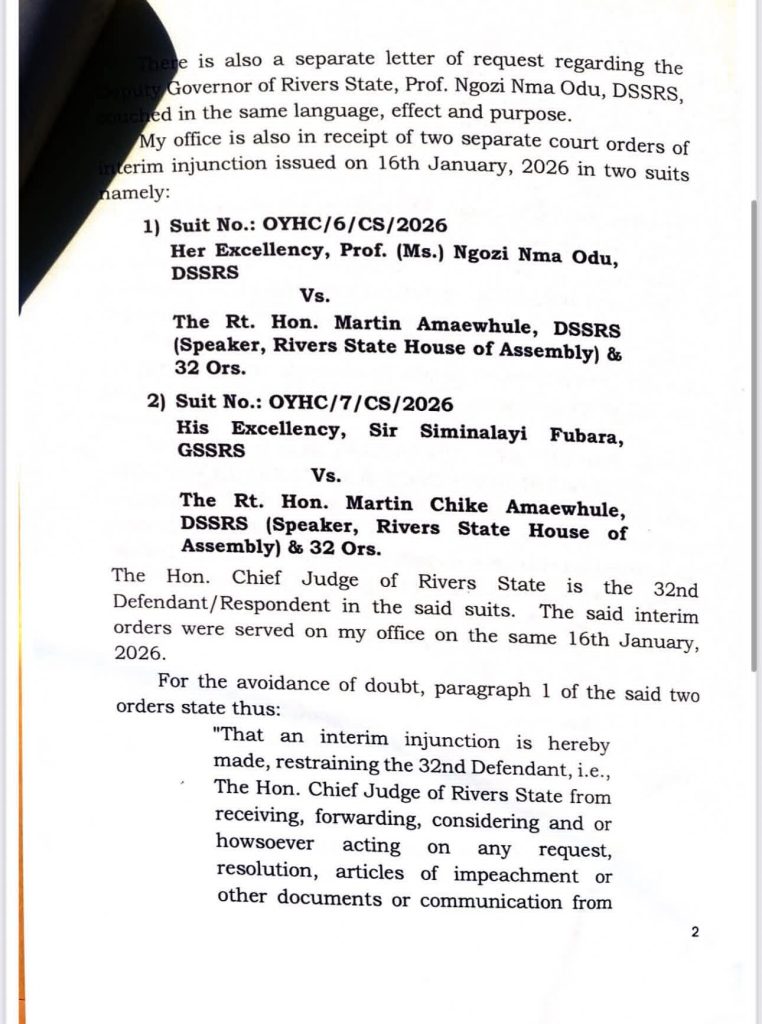
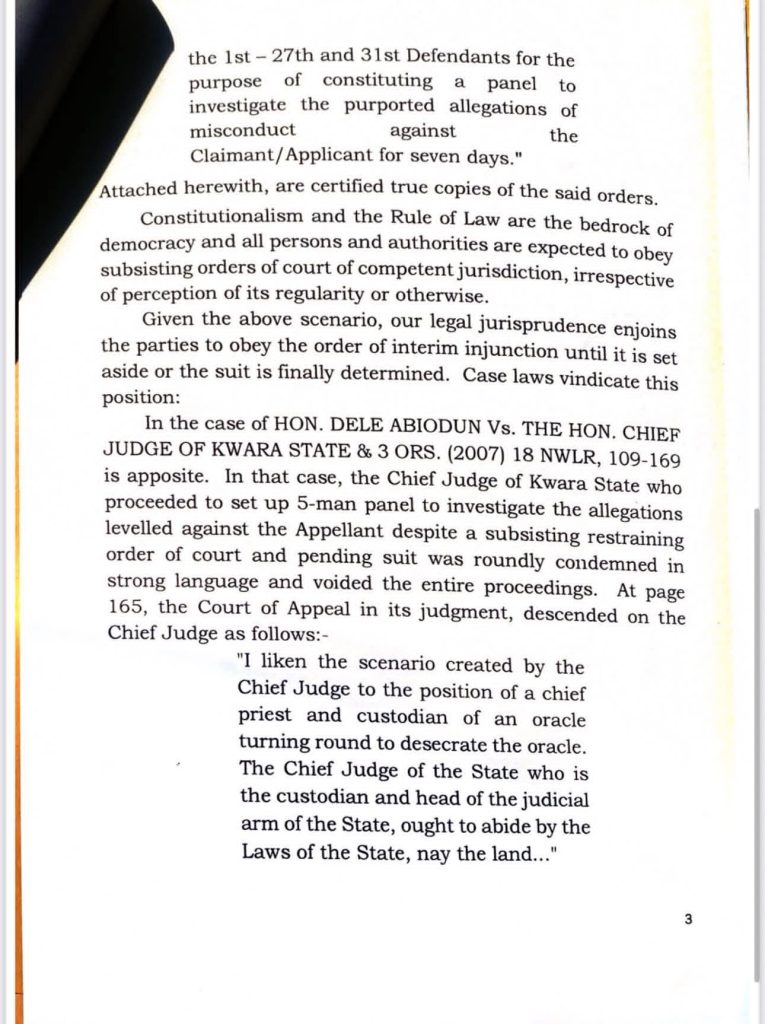
January 16, 2026. Oyigbo High Court, Justice Florence Fiberesima on the bench. Two ex parte suits—one from Fubara, one from Odu—arrive. Interim injunctions issue like lightning. They name the targets: restrain Speaker Amaewhule, the 26 co-defendants, the Clerk, and—crucially—the Chief Judge of Rivers State, Justice Simeon Chibuzor Amadi. No receiving, no forwarding, no considering, no acting on any impeachment resolution or document. Seven days, pending hearing. Service by pasting at the Assembly gate. The gate locks before the panel can breathe.
Justice Amadi receives the Assembly’s request. He receives the court orders.
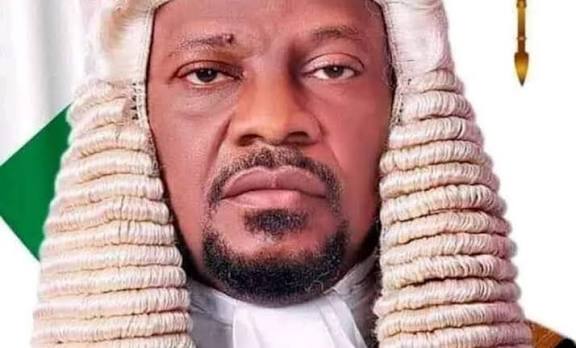
Imperatives collide: the legislature’s urgency versus the judiciary’s command.
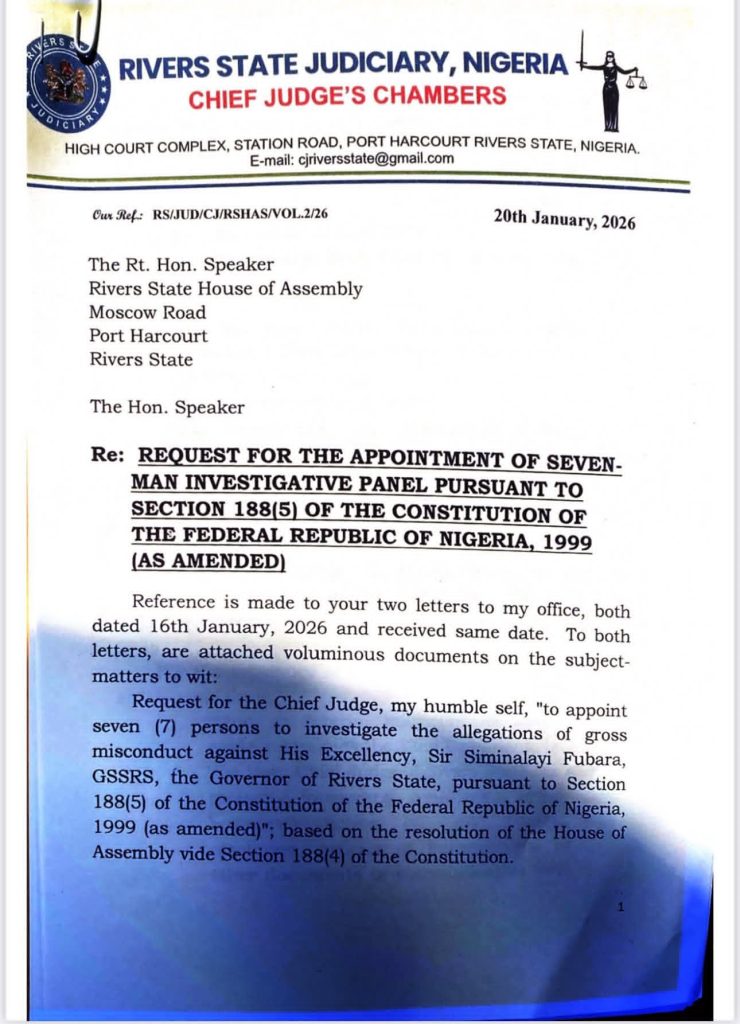
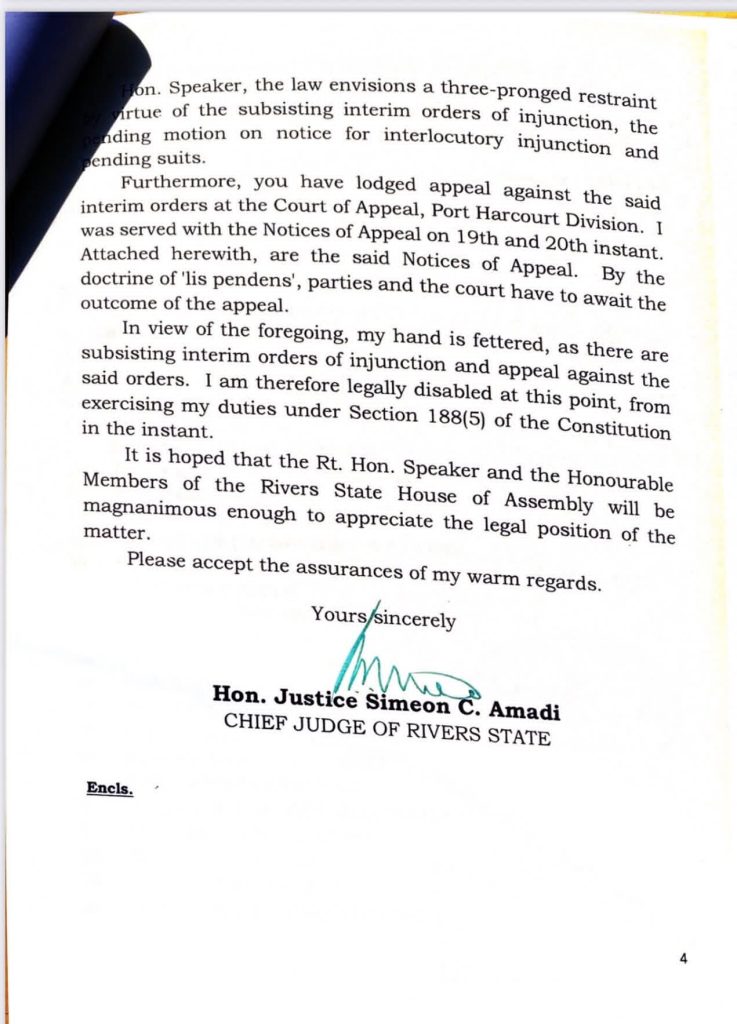
January 20, 2026. A letter, signed personally by Justice Chibuzor Amadi, travels to Speaker Amaewhule.
The words are spare, unyielding: “My hand is fettered.” Subsisting interim injunctions, a pending appeal—his hands are “legally disabled.” No panel can be constituted under Section 188(5). The process stops cold, not from rebellion, but from fidelity to law.
A senior judicial source, speaking anonymously, framed it plainly: “The Chief Judge was named defendant and restrained. The Constitution offers no escape hatch. Obey the order—or break the law. No middle path.”
This breaks from Nigeria’s impeachment playbook: swift political strikes, later challenged on technicalities. Here, the intervention strikes first—at the procedural threshold—before spectacle can overtake substance.
Allies of the Assembly waved Section 188(10), the clause barring courts from questioning proceedings.
Yet Supreme Court doctrine carves a clear line: defer on merits, enforce on process. Inakoju v. Adeleke (2007) stands sentinel: skip mandatory steps, and the exercise collapses, politics notwithstanding. Section 188 is blueprint, not blank cheque.
An appellate lawyer tracking the filings cut to the core: “It protects deliberation, not defiance. Violate the sequence, and the whole thing crumbles.”
Today—January 23, 2026. Oyigbo High Court again. Justice Fiberesima confirms: appeals lodged at the Court of Appeal. The substantive suits adjourn sine die—indefinitely—pending appellate resolution. Interim restraints endure. No panel assembles. No trial convenes. Only the slow grind of higher courts ahead.
Rivers has become Nigeria’s quiet constitutional proving ground. Can impeachment march while the gatekeeper remains barred? Can courts police procedure without trespassing on legislative turf? Where does judicial restraint end and political autonomy begin?
The appellate verdict will not just settle Rivers State’s feud. It will redraw impeachment boundaries nationwide—perhaps a subtle lesson for fragile federations on balancing haste with rule.
To global watchers, African power struggles often read as naked force. Rivers offers contrast: no branch claims outright victory. The legislature charges. The executive counters. The judiciary enforces pause. Through nothing louder than adherence to sequence, the Constitution prevails.
A veteran political observer captured the irony: “They sought speed. The law demanded sequence. Sequence won.”
For now, the ledger records absence:
No investigative panel.
No impeachment trial.
No removal.
Only a deliberate, unbroken pause—an institutional stillness amid the storm.
In Rivers State, power blinked. Not in defeat, but because the law refused to blink first. In young democracies, that unflinching refusal may be the ultimate act of strength.
—Emeka Amaefula
+234(0)8111813069