

AFRICA’S LONGEST-SERVING TRADITIONAL RULER TURNS 101
Igwe Kenneth Orizu III of Nnewi celebrates 101 years of life and 63 years on the throne, distinguished by wisdom, experience and a commitment to peace.
By Chief Anayo Matthew Nwosu (Ọjịakọnobi Nnewi)
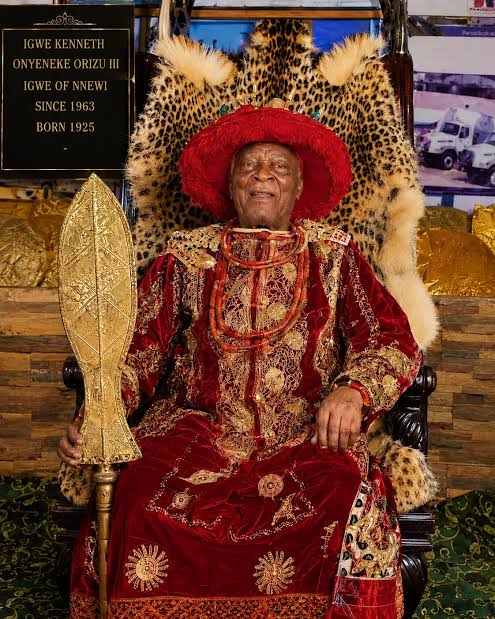
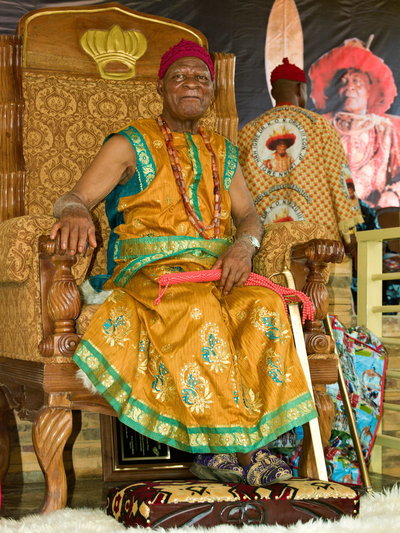
Dr Kenneth Onyeneke Orizu III, CON, JP, the traditional ruler of Nnewi in Anambra State, celebrated his 101st birthday on 30 October 2026, marking a remarkable milestone in a life spanning more than a century and a reign extending over 63 years.
Born on 30 October 1925, the monarch ascended the throne of Otolo and Nnewi on 6 February 1963 and was formally crowned on 2 June of the same year. His reign has spanned Nigeria’s colonial-era transition, independence, the Civil War, successive military administrations and the present democratic dispensation.
Members of the royal family, the Nnewi Royal Cabinet and other community stakeholders joined well-wishers in celebrating his longevity, continued relevance and enduring place in the history of Nnewi.
At 101, Igwe Orizu III represents a remarkable link between the kingdom’s ancestral heritage and its modern industrial and commercial achievements. His life and reign offer an opportunity to reflect on the evolution of Nnewi’s traditional institution and the responsibilities of leadership in a changing society.
A MONARCH STILL AT WORK
An encounter with Igwe Kenneth Orizu III continues to surprise those who meet him. According to his admirers, age has neither diminished his sharp wit nor extinguished his capacity for thoughtful judgement.
Despite his advanced years, he has continued to be associated with traditional mediation, the resolution of cultural disputes and the handling of sensitive communal matters.
In a community where tradition, commerce and modern pressures frequently intersect, the traditional institution plays an important role in preserving social cohesion. The monarch’s approach to leadership, as described by those familiar with his reign, emphasises patience, consultation and persuasion rather than confrontation.
He is particularly admired for allowing disputing parties the opportunity to reconsider their positions, a quality that has contributed to his reputation as a conciliatory traditional ruler.
The official Nnewi city portal identifies Igwe Orizu III as the paramount traditional ruler of the kingdom and describes the Igwe-in-Council as an institution responsible for traditional affairs, cultural matters, community disputes and intercommunity relations.
A CENTURY OF LIFE AND AN ENDURING ROYAL LEGACY
Reaching 101 years is an extraordinary personal milestone. For a traditional ruler whose reign has lasted more than six decades, it also represents an extended period of continuity within a community’s leadership structure.
Igwe Orizu III has lived through profound political, economic, religious and cultural changes. His reign has witnessed the transformation of Nigeria from colonial administration to independence, the upheavals of the Civil War and the subsequent development of the country’s democratic institutions.
As a member of the Nnofo royal lineage, he also occupies an important place in the succession of traditional rulers associated with Otolo and Nnewi.
His longevity has allowed successive generations of Nnewi people to witness the continuity of the royal institution under one monarch.
For younger members of the royal family and the wider community, his life offers an opportunity to reflect on the responsibilities of public service, the preservation of cultural identity and the importance of maintaining relationships across generations.
NNEWI’S TRANSFORMATION INTO AN INDUSTRIAL POWERHOUSE
Nnewi has developed into one of Nigeria’s most prominent commercial and industrial centres, widely associated with indigenous entrepreneurship, manufacturing, automotive spare-parts trading and business enterprise.
The city’s economic development reflects the initiative of its people, the expansion of commercial networks and the emergence of successful enterprises across generations.
Its industrial achievements cannot be attributed to the traditional ruler alone. Nevertheless, traditional institutions can contribute to the stability, cultural identity and communal cooperation that support economic activity.
Igwe Orizu III’s reign has coincided with this remarkable transformation. His responsibility as a traditional ruler has included preserving the kingdom’s cultural heritage while maintaining relationships among its constituent communities.
Nnewi’s traditional governance structure recognises four principal communities: Otolo, Uruagu, Umudim and Nnewichi. The official city portal identifies the Obi of Otolo, Igwe Kenneth Orizu III, as the paramount ruler, alongside the traditional rulers of the other three communities.
The continued existence of these traditional institutions underscores the importance of consultation and cooperation in managing communal affairs.
The town’s commercial achievements, meanwhile, demonstrate how local initiative and enterprise can transform a community’s economic standing.
FROM MAZI NNEWI TO THE MODERN MONARCHY
The history of Nnewi is rooted in ancestral traditions, oral accounts and the development of settlements that eventually formed the modern kingdom.
According to the traditional history presented by the Nnewi city portal, the kingdom’s origins are associated with Mmaku, regarded as an ancestral founder of Otolo. His son, Ikenga, is traditionally identified as the father of Nnewi, the ancestral figure from whom the community derives its name.
Over successive generations, the descendants of these ancestral figures established settlements and lineages that developed into the four principal communities of Otolo, Uruagu, Umudim and Nnewichi.
These communities retained their individual identities while developing shared cultural traditions and institutions.
The historical development of Nnewi’s paramount throne is traditionally traced through successive generations of rulers, including Nnewi, Okpala, Digbo, Otolo, Enem, Nnofo, Udude and Ezeagha.
The chronology identifies Digbo as succeeding Okpala, followed by Otolo, Enem, Nnofo and Udude, who bore the title Eze Onolu. Ezeagha followed Udude in the published succession.
The later royal succession includes Ezeụgbọanyịmba, also rendered as Eze Ugbonyamba or Orizu I, followed by Igwe Iwuchukwu, Igwe Josiah Nnaji Orizu II and the present monarch, Igwe Kenneth Onyeneke Orizu III.
According to the royal lineage, Orizu III is the 20th Obi of Otolo and Igwe of Nnewi.
COLONIAL ENCOUNTER AND THE EMERGENCE OF THE ORIZU DYNASTY
The arrival of British colonial administration in Nnewi in the early twentieth century marked a significant turning point in the community’s political history.
Historical accounts place the establishment of British colonial authority in Nnewi around 1904. The colonial encounter introduced new administrative and judicial structures and altered the exercise of traditional authority.
The transition affected the kingdom’s political organisation, relations with neighbouring communities and the operation of its traditional institutions.
A historical account by Nnewi Community identifies British colonial officer Major Moorhouse with the establishment of colonial authority in the area.
The colonial period also coincided with the expansion of Western education and Christianity.
Within the royal family, Ezeụgbọanyịmba, identified in the royal lineage as Orizu I, was succeeded by his son, Josiah Nnaji Orizu II.
The present monarch’s father, Igwe Josiah Nnaji Orizu II, preceded him on the throne. Kenneth subsequently succeeded his father in 1963.
The official royal biography records that Kenneth Orizu was born on 30 October 1925, succeeded his father in February 1963 and was formally crowned on 2 June 1963.
His accession marked the beginning of a reign that would extend beyond six decades and witness some of the most consequential developments in Nigeria’s modern history.
SIXTY-THREE YEARS ON THE THRONE
Igwe Kenneth Orizu III ascended the throne on 6 February 1963, becoming the 20th Obi of Otolo and Igwe of Nnewi, according to the royal chronology.
His formal coronation followed on 2 June 1963.
By his 101st birthday on 30 October 2026, the monarch had spent approximately 63 years and eight months on the throne, conventionally described as 63 years.
His reign has extended across different political administrations and generations of Nnewi residents. During that time, the kingdom has continued to develop its commercial identity while maintaining the traditional institution as a custodian of cultural heritage.
The longevity of his reign places him among Nigeria’s longest-serving traditional rulers and among Africa’s longest-reigning monarchs.
A CONTROVERSIAL TITLE AND A CHOICE FOR PEACE
One of the significant episodes highlighted in the account of Igwe Orizu III’s reign concerns his decision to relinquish the title of Obi Nnewi in an effort to address divisions surrounding the traditional institution.
The report published by Aluta News on 31 October 2026 also recounts this episode, describing it as one of the defining moments of the monarch’s reign.
Nevertheless, the precise circumstances of the decision, the parties involved and the formal status of the title require confirmation from authoritative royal or community records.
The title issue should therefore be understood within the context of the traditional institution’s history rather than treated as a fully documented constitutional or legal transaction.
What remains central to the author’s account is the principle that peaceful coexistence and communal stability should take precedence over personal disagreements.
For a traditional ruler whose responsibilities include preserving relationships among different families and communities, reconciliation is an important element of leadership.
THE LIVING EMBODIMENT OF NNEWI
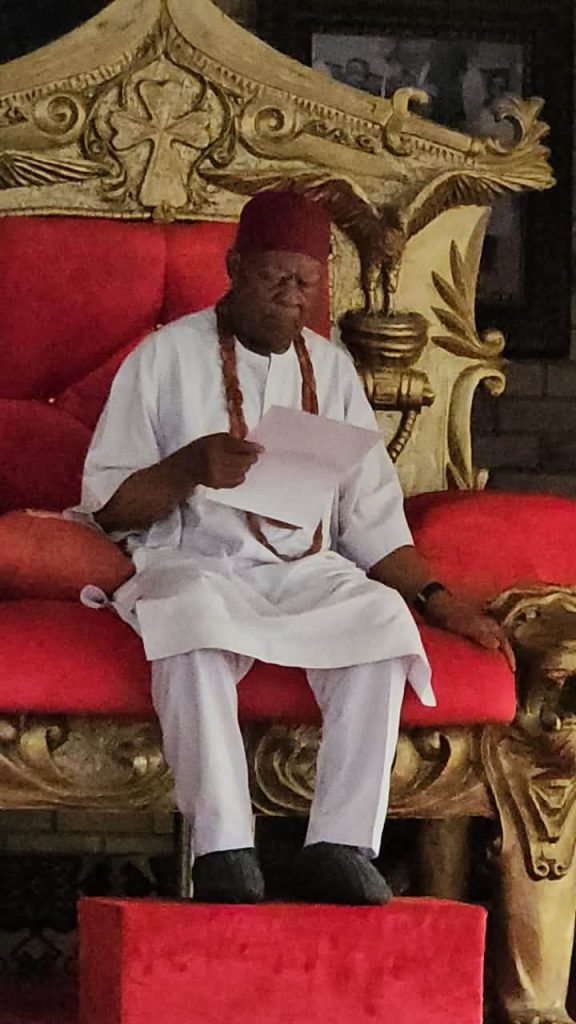
At 101, Igwe Kenneth Onyeneke Orizu III stands as a living witness to more than a century of Nigerian history and over six decades of traditional leadership.
Born in 1925, he has lived through the final years of British colonial rule, Nigeria’s independence, the Civil War and successive periods of political and economic change.
Since ascending the throne in 1963, he has remained the central figure in the traditional institution of Otolo and the paramount kingship of Nnewi.
His reign has coincided with the emergence of Nnewi as one of Nigeria’s leading indigenous industrial and commercial centres, while the traditional institution has continued to play a role in cultural preservation and communal affairs.
His life also illustrates the enduring importance of traditional institutions in societies where ancestral identity, family history and communal relationships remain influential.
At 101, the monarch’s significance lies not merely in his age or the length of his reign, but also in the historical continuity he represents.
For Nnewi, his life connects the ancestral traditions of the past with the aspirations of present and future generations.
As the people celebrate his 101st birthday and reflect on his 63 years on the throne, the occasion provides an opportunity to recognise his place in the history of the kingdom and the responsibilities that accompany traditional leadership.
Long may our Igwe live!
Written by Chief Anayo Matthew Nwosu (Ọjịakọnobi Nnewi), a corporate and investment banker resident in Lagos.