
2027 RIVERS STATE ELECTIONS: THE SHAPE OF THINGS TO COME
By Emeka Amaefula
The political atmosphere in Rivers State has become increasingly charged as campaigns open for the 2027 general election and political actors begin preparations for what promises to be one of the most competitive contests in the state’s recent history.
According to the Independent National Electoral Commission’s revised timetable, campaigns for the Presidential and National Assembly elections commenced on August 19, 2026, ahead of polling scheduled for Saturday, January 16, 2027. Campaigns for the Governorship and State House of Assembly elections are expected to commence on September 9, 2026, with voting fixed for Saturday, February 6, 2027.
In Rivers State, the stakes appear particularly high because incumbent Governor Sir Siminalayi Fubara is not seeking re-election. His departure from the governorship race has created a major political vacuum and opened the field for a fresh struggle for control of Brick House.
Across the 23 Local Government Areas, political stakeholders are already moving from community to community, rebuilding alliances, consolidating grassroots structures and positioning themselves for votes across Rivers State’s 319 electoral wards and 4,442 polling units.
The Independent National Electoral Commission’s official records for the 2019 general election confirm that Rivers State had 23 Local Government Areas, 319 Registration Areas or wards and 4,442 polling units during that election cycle.
The emerging 2027 contest is increasingly taking shape as a battle of personalities, ethnic calculations, political structures, campaign financing and the capacity of individual candidates to build statewide alliances that can survive beyond party labels.
According to reports on the credentials and particulars displayed by INEC at its office along Aba Road in Port Harcourt, 19 candidates have been presented by political parties for the Rivers State governorship election. The documents, contained in Form EC-9, provide information on the candidates’ names, political affiliations, educational qualifications and other personal credentials.
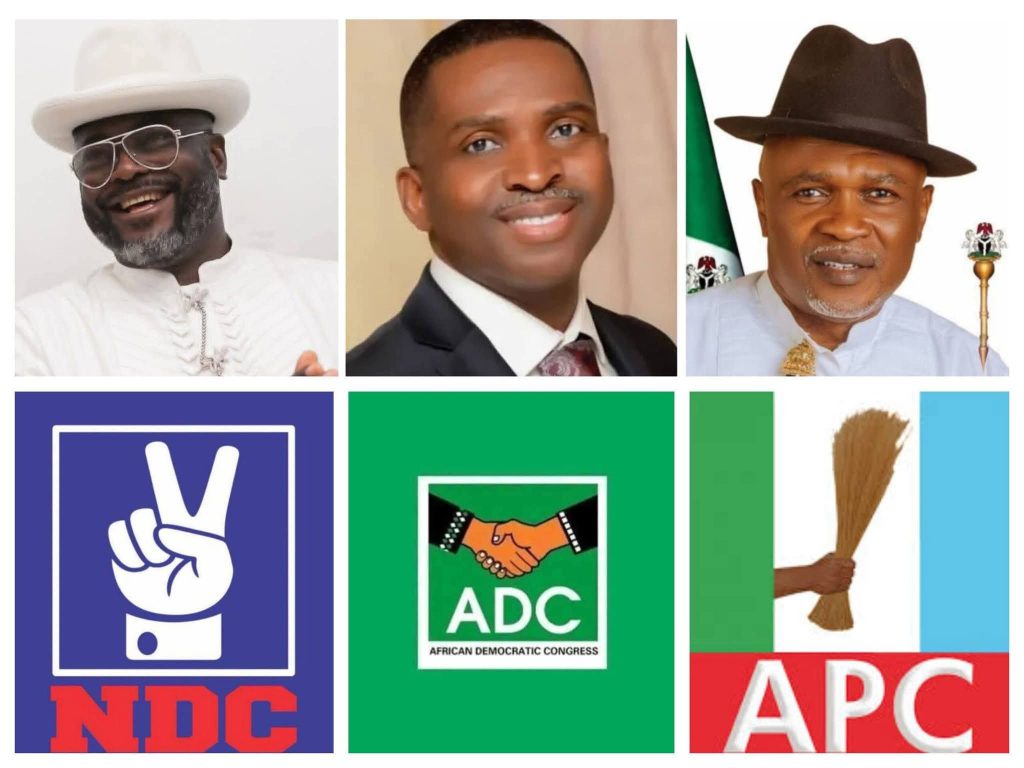
The candidates and running mates reported from the published records include Lulu-Briggs Dumo Owukori of the Nigerian Democratic Congress, NDC, with no deputy listed in the available EC-9 record at the time of inspection; Gabriel Pidomson of the African Democratic Congress, ADC, with Okumgba David Amapakaye as his running mate; Ejekwu Samuel Soni of the Peoples Democratic Party, PDP, with Ehuwa Kabaka as deputy; Chibuzor Rani of Accord, with Davies Ikubogh as deputy; Tata Kenneth of the Action Peoples Party, APP, with Dappa Kelvin as deputy; Lawson Angel of the African Democratic Party, ADP, with Azunwena Regina as deputy; Benjamin Oli of the Boot Party, BP, with no deputy listed in the available record; Warighani Zebulum of the DLA, with Joseph Udo as deputy; Minaibim Harry of the National Rescue Movement, NRM, with Iwedi Ogonda Ada as deputy; Azimiku Gidiom of the Social Democratic Party, SDP, with Ogochukwu Hekerem as deputy; Kiegha Nature Dumale of the Peoples Redemption Party, PRP, with Membere Deborah as deputy; Harry Victor Godwin of the Zenith Labour Party, ZLP, with Agumba Nnamdi as deputy; Obu Omangima of the All Progressives Grand Alliance, APGA, with John-Woke Geraldine as deputy; West Ivy of the African Action Congress, AAC, with Eletuo Ijendu as deputy; Eke Benjamin Israel of the Action Alliance, AA, with Awortu Charles as deputy; Abiye Georgewell of the New Nigeria Peoples Party, NNPP, with Gbimadee Raymond as deputy; Johnbull Obrasu of the Young Progressives Party, YPP, with Taagaloobari Celestine as deputy; Whyte Churchill of the Allied Peoples Movement, APM, with Bardom Zaavalo as deputy; while Labour Party candidate particulars were also among the records displayed by INEC.
INEC also displayed the particulars of candidates seeking election into the 32 constituencies of the Rivers State House of Assembly, with reports indicating that the PDP, NDC and ADC fielded candidates across all 32 constituencies, while several other political parties contested varying numbers of seats.
However, the real battle for Rivers State in 2027 will not be determined by party logos alone.
It will be determined by the ability of candidates to navigate the state’s complex ethnic composition, build political structures across Local Government Areas, win the confidence of urban and rural voters and, above all, convince Rivers people that they can govern without becoming instruments of remote control by powerful political godfathers.
Rivers State remains one of Nigeria’s most ethnically diverse states, with more than 20 indigenous ethnic groups and approximately 30 languages. The three broad ethno-political blocs that frequently dominate political calculations are the Ikwerre, Ogoni and Ijaw peoples, alongside other influential communities including the Ogba, Ekpeye, Etche, Kalabari, Okrika, Abua, Engenni and Degema peoples.
The Ikwerre political bloc in RIVERS East Senatorial Zone occupies a strategic position in the upland areas around Port Harcourt, Obio/Akpor, Ikwerre and Emohua Local Government Areas. These areas also host substantial populations of non-indigenes and economic migrants attracted over several decades by the oil and gas industry, government institutions and the rapid expansion of the Port Harcourt metropolitan area.

Under former Governor Chibuike Rotimi Amaechi, non-indigenes were politically organized under the platform popularly described as “Indigenes Without Borders,” effectively creating an additional political constituency whose voting strength could not be ignored. That constituency remains politically relevant because non-indigenes continue to be courted through party positions, appointments and participation in government.
Port Harcourt’s metropolitan expansion cuts across several Local Government Areas and accommodates substantial populations from virtually every ethnic group in Rivers State and beyond. Obio/Akpor, in particular, remains one of the most politically important battlegrounds because of its large urban population and historical capacity to produce decisive electoral figures.
Another major voter-demographic challenge confronting any serious governorship candidate in Rivers State is the politically strategic Orashi region.
The Orashi region in Rivers West Senatorial Zone comprises four large and populous Local Government Areas — Ogba/Egbema/Ndoni, popularly known as ONELGA; Ahoada East; Ahoada West; and Abua/Odual. Together, these four Local Government Areas constitute a formidable electoral demographic and a major factor in the Rivers State political equation.
For any candidate seeking to become governor on the strength of a truly statewide mandate, the Orashi region in Rivers West Senatorial Zone cannot be regarded as a peripheral political territory. Its population, geographical spread, ethnic diversity and voting communities make it one of the strategic battlegrounds capable of influencing the overall outcome of a governorship election.
The region presents its own peculiar political and developmental challenges. Large parts of the area are characterized by difficult terrain and interior communities that remain hard to access. In many of these communities, the visible impact of government infrastructure and development projects remains limited despite the fact that substantial parts of the region are oil- and gas-bearing host communities.
This contradiction between enormous natural-resource wealth and the limited level of development in several interior communities could become an important political issue during the 2027 campaigns.
A serious governorship candidate seeking votes in the Orashi region will therefore need more than ceremonial visits and election-season promises. Such a candidate will need to demonstrate a practical understanding of the difficult terrain, transportation challenges and developmental needs of communities whose lands have contributed significantly to the oil and gas wealth of Rivers State and Nigeria.
The political importance of the Orashi axis is also strengthened by its rich ethnic composition. The Engenni, Ogba, Egbema, Ndoni and Ekpeye peoples constitute strong and historically influential ethnic nationalities in the wider Rivers State political equation.
These ethnic nationalities have their own community structures, political leaders, traditional institutions and grassroots networks. Any governorship candidate hoping to secure substantial support from the region must therefore understand that winning votes across the four Local Government Areas will require broad engagement rather than reliance on a single political structure or ethnic bloc.
The Orashi region is equally home to influential politicians, respected elders and traditional rulers whose voices command considerable respect within their communities.
Among the prominent political personalities associated with the region is Brother Felix Obuah, a strong grassroots politician who is now seeking election to represent Rivers West Senatorial District in 2027. His political networks and relationships across Rivers State make his activities and political direction relevant to the unfolding electoral calculations.
Former Governor Dr. Peter Odili also remains one of the most experienced and influential political figures associated with the broader Rivers political landscape. Over the years, he built political relationships and structures that continue to attract attention whenever major electoral alliances are being formed in Rivers State.
The region also has highly respected first-class traditional rulers and institutions, including the Oba of Ogbaland, Eze Ekpeye Logbo III and other prominent traditional authorities whose positions command considerable respect among their people.
Although traditional rulers are expected to remain above partisan politics, their influence as custodians of their communities and their moral authority within the traditional political structure cannot be ignored in any serious assessment of grassroots sentiment.
Their subjects and communities naturally hold such institutions in high regard. Consequently, candidates seeking acceptance across the Orashi region will have to recognise the importance of engaging respectfully with traditional institutions, community leaders and other legitimate grassroots stakeholders.
For any genuine governorship candidate, therefore, the Orashi region poses a major voter-demographic challenge. No candidate can reasonably assume that victory in the Port Harcourt metropolitan axis or in a few urban Local Government Areas alone will automatically guarantee statewide success.
The interior communities of ONELGA, Ahoada East, Ahoada West and Abua/Odual represent voters whose political choices may increasingly be influenced by practical questions of roads, healthcare, education, employment, environmental protection and the equitable distribution of the benefits derived from the oil and gas resources located within or around their communities.
The 2027 election may therefore provide the people of the Orashi region with another opportunity to place their developmental challenges firmly on the campaign agenda and demand concrete commitments from those seeking to govern Rivers State.
The changing nature of Rivers State’s voting behaviour can be seen clearly by comparing the presidential elections of 2019 and 2023.
In the 2019 presidential election, Rivers State overwhelmingly voted for Atiku Abubakar of the Peoples Democratic Party, PDP, against President Muhammadu Buhari of the All Progressives Congress, APC.
The final statewide result recorded Atiku Abubakar with 473,971 votes against Buhari’s 150,710 votes. Rivers recorded 678,167 accredited voters, 666,585 votes cast, 642,165 valid votes and 24,420 rejected votes. Atiku therefore won Rivers State by a margin of more than 323,000 votes. The official INEC 2019 presidential-election portal and the contemporaneous final state collation figures confirm the statewide outcome.
Available contemporaneous reports of LGA-level collation in Rivers State showed the enormous strength of the PDP in several Local Government Areas.
In Oyigbo Local Government Area, Atiku polled 16,102 votes against Buhari’s 3,520 votes. In Asari-Toru, however, Buhari won with 18,180 votes against Atiku’s 3,175 votes, making the LGA one of the early APC strongholds in the state.
In Omuma, Atiku polled 15,322 votes against Buhari’s 2,494 votes. In Ogba/Egbema/Ndoni, popularly known as ONELGA, Atiku recorded 28,536 votes against Buhari’s 10,996 votes.
In Obio/Akpor, one of the most politically strategic Local Government Areas in Rivers State, Atiku recorded 69,981 votes against Buhari’s 6,875 votes in the reported LGA collation figures.
In Eleme, Atiku polled 8,464 votes against Buhari’s 2,412 votes. In Gokana, Atiku scored 10,276 votes against Buhari’s 9,328 votes.
In Andoni, Atiku polled 72,330 votes against Buhari’s 10,766 votes. In Etche, the PDP candidate secured 11,135 votes against Buhari’s 7,163 votes.
In Khana, Atiku recorded one of the most dominant results among the early LGA figures, polling 89,843 votes against Buhari’s 5,329 votes. These LGA-level figures were reported from the Rivers State INEC collation process during the 2019 presidential election.
The 2019 election therefore demonstrated the overwhelming political strength of the PDP establishment in Rivers State at the time.
But four years later, the political map changed dramatically.
The 2023 presidential election in Rivers State produced one of the most significant realignments in the state’s modern electoral history.
Bola Ahmed Tinubu of the APC polled major figures across several Local Government Areas, while Atiku Abubakar and the PDP suffered significant setbacks.
The LGA-by-LGA comparison between Tinubu and Atiku in the 2023 presidential election was as follows:
Abua/Odual recorded 5,653 votes for Tinubu and 4,685 for Atiku. Ahoada East recorded 8,066 votes for Tinubu and 2,358 for Atiku. Ahoada West recorded 3,443 votes for Tinubu and 2,582 for Atiku. Akuku-Toru recorded 3,182 votes for Tinubu and 3,131 for Atiku.
Andoni recorded 3,306 votes for Tinubu and 4,614 for Atiku. Asari-Toru recorded 14,483 votes for Tinubu and 4,476 for Atiku. Bonny recorded 2,708 votes for Tinubu and 2,406 for Atiku.
Degema recorded 2,375 votes for Tinubu and 3,108 for Atiku. Eleme recorded 8,368 votes for Tinubu and 2,391 for Atiku. Emohua recorded 9,145 votes for Tinubu and 5,242 for Atiku.
Etche recorded 8,368 votes for Tinubu and 5,919 for Atiku. Gokana recorded 10,122 votes for Tinubu and 8,484 for Atiku.
Ikwerre recorded 9,609 votes for Tinubu and 4,869 for Atiku. Khana recorded 7,649 votes for Tinubu and 5,483 for Atiku.
Obio/Akpor produced the most politically dramatic figure, with Tinubu polling 80,239 votes against Atiku’s 368 votes. Ogba/Egbema/Ndoni recorded 6,057 votes for Tinubu and 4,099 for Atiku. Ogu/Bolo recorded 2,428 votes for Tinubu and 3,187 for Atiku.
Okrika recorded 2,729 votes for Tinubu and 8,476 for Atiku. Omuma recorded 6,328 votes for Tinubu and 1,293 for Atiku. Opobo/Nkoro recorded 5,701 votes for Tinubu and 1,542 for Atiku.
Oyigbo recorded 16,630 votes for Tinubu and 1,046 for Atiku. Port Harcourt City recorded 5,562 votes for Tinubu and 7,203 for Atiku, while Tai Local Government Area recorded 9,442 votes for Tinubu and 1,506 for Atiku.
The full Rivers State presidential-election breakdown reported Tinubu winning 15 of the 23 Local Government Areas, while the PDP won only three, with the remaining LGAs won by Peter Obi of the Labour Party. The statewide figures also placed Atiku in third position in Rivers State with 88,468 votes.

The political lesson from the 2019 and 2023 elections is therefore unmistakable.
Rivers State voters are capable of changing their electoral direction dramatically when political alliances shift, when powerful grassroots structures change their allegiance and when candidates successfully build new local coalitions.
In 2019, Atiku Abubakar and the PDP dominated Rivers State, polling 473,971 votes against Buhari’s 150,710.
By 2023, the political configuration had changed completely. Tinubu’s victory in Rivers State demonstrated how powerful political structures and strategic alliances could alter voting patterns within a relatively short period.
The most striking example was Obio/Akpor.
In the reported 2019 LGA collation figures, Atiku polled 69,981 votes against Buhari’s 6,875.
In 2023, Tinubu polled 80,239 votes in Obio/Akpor, while Atiku recorded only 368.
That dramatic reversal remains one of the clearest demonstrations of the power of local political organisation in Rivers State.
The 2027 governorship election must therefore be analysed against that background.
The major ethnic blocs are likely to produce or strongly support prominent political contenders. Yet ethnic identity alone may not determine the final outcome.
Political machinery, election-day mobilisation, cross-ethnic alliances, campaign resources and the ability of candidates to convince voters that they are independent-minded may prove even more important.
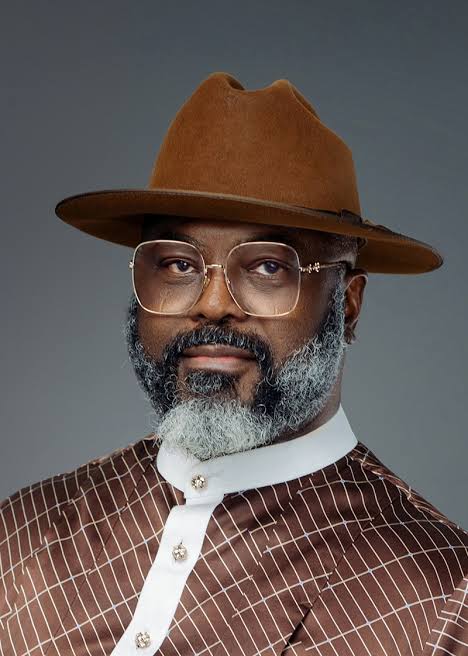
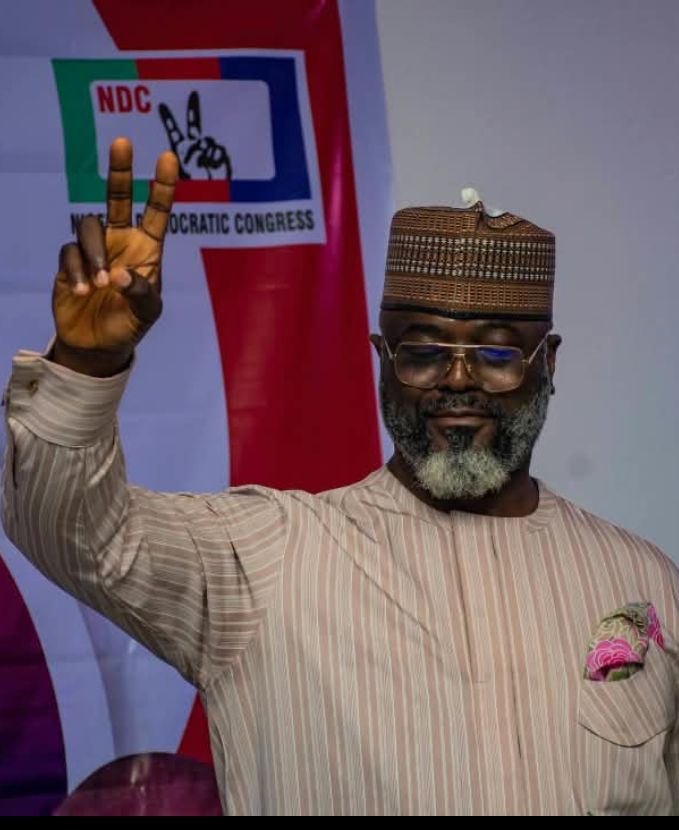
High Chief Dumo Lulu-Briggs of the Nigerian Democratic Congress enters the contest at a time when many Rivers voters are searching for alternatives outside the traditional political structures that have dominated the state.
The NDC is also expected to draw political strength from the influence and commitment of its national leadership, particularly Senator Seriake Dickson, the party’s national leader and a prominent Ijaw political figure from Bayelsa State.
Dickson’s political relationships, experience and influence could provide an important foundation for the NDC’s expansion beyond its existing base. The extent to which that support can be translated into a formidable grassroots structure across all 23 Rivers State Local Government Areas will be one of the major questions of the 2027 campaign.
For Lulu-Briggs, the central challenge will be to build a coalition that goes beyond ethnic identity.
If he succeeds in penetrating Ikwerre, Ogoni, Etche, Ogba, Ekpeye and urban non-indigene communities, while consolidating support across riverine areas and making significant inroads into the Orashi political axis, he could become a major beneficiary of protest votes from Rivers people dissatisfied with the prolonged political crisis and the dominance of established godfather structures.
His political campaign may also benefit from the historical name and legacy of his late father, High Chief O.B. Lulu-Briggs, whose influence remains recognised within Rivers State’s political and business history.
Sir Gabriel Pidomson’s candidacy also introduces another significant dimension into the 2027 contest.
An Ogoni political figure with a strong educational profile, Pidomson could potentially benefit from a strong Ogoni political mobilisation if he succeeds in expanding his appeal beyond his ethnic base.
However, his perceived political leaning towards the Amaechi political camp could become both an advantage and a burden.
The memory of the 2015 presidential election remains politically sensitive in Rivers State. Former Governor Amaechi played a prominent national role in the APC campaign that defeated then President Goodluck Jonathan, an Ijaw son.
That political history continues to shape perceptions among some voters, particularly where ethnic memory intersects with contemporary political alliances.
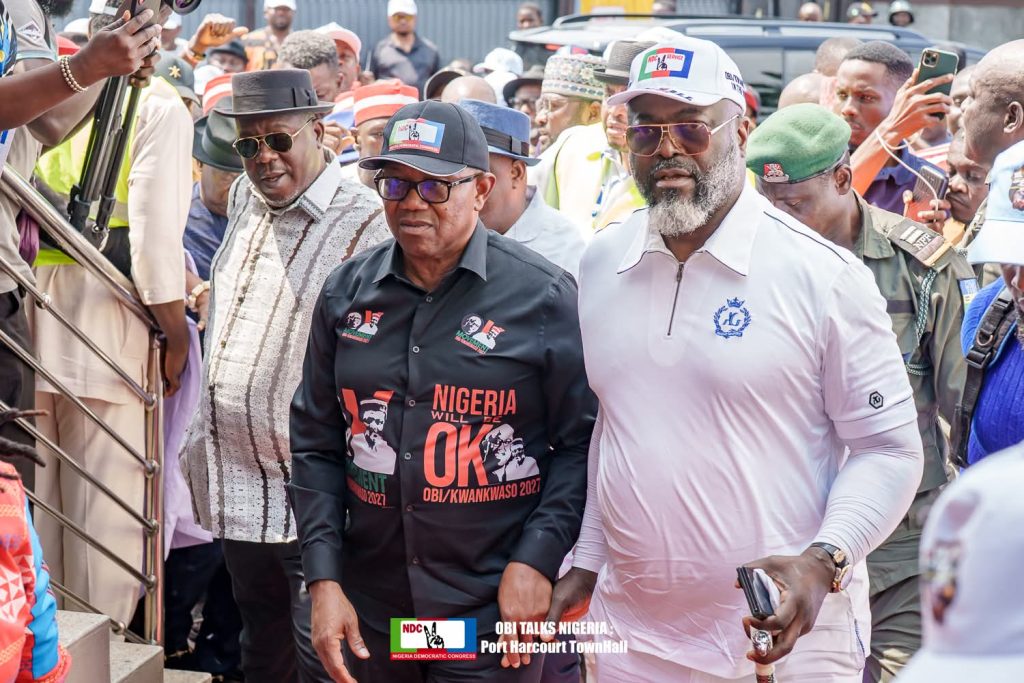
Whether Pidomson can establish a political identity clearly independent of the baggage of past alliances will therefore be one of the important tests of his campaign.
The Rivers State House of Assembly election is equally unlikely to produce a completely predictable outcome.
The 32 Assembly seats could be shared among several political parties depending largely on the individual strength of candidates in their constituencies and the political structures operating within each Local Government Area.
Speaker Martin Amaewhule’s pursuit of the Obio/Akpor Federal Constituency seat being vacated by the current federal representative adds another major dimension to the political realignment.
Political figures associated with established grassroots movements and structures aligned with the FCT Minister are expected to face direct contests from candidates supported by the APC, PDP factions, Labour Party, NDC, ADC and other political parties and emerging alliances.
The 2027 Rivers State election may therefore become one of the most competitive elections in the state’s recent political history.
Governor Fubara’s decision not to seek re-election has removed the conventional advantage of an incumbent seeking a second term.
What remains is an open contest in which political godfathers, ethnic leaders, party structures, wealthy financiers, community leaders and grassroots mobilisers will struggle for influence.
But the final decision belongs to Rivers voters.
The presidential elections of 2019 and 2023 have already demonstrated that Rivers voters cannot be permanently assigned to any political party, ethnic bloc or godfather.
In 2019, the PDP dominated the presidential vote in Rivers State.
By 2023, a completely different political alignment had dramatically altered the distribution of votes across the Local Government Areas.
The message for every governorship candidate in 2027 is therefore clear: no candidate should assume that Rivers voters belong permanently to any political structure.
The 2027 general election offers Rivers people an opportunity to speak decisively against prolonged political instability and to determine whether political power should remain concentrated in the hands of a few influential godfathers or be diffused through a broader and more accountable democratic process.
The real question confronting Rivers voters is therefore not merely who will become the next governor.
It is whether the next governor will possess the political independence, statewide acceptance, administrative capacity and courage to govern Rivers State without becoming an instrument of remote control.
That is the real shape of things to come.
— Emeka Amaefula
+234 (0)8111813069