

REPORT ON SYSTEMIC EXTORTION AND RACKETEERING ON ROADS IN RIVERS AND IMO STATES: HIGHWAY POLICE CHECKPOINTS AND URBAN GANG OPERATIONS
Incident Summary
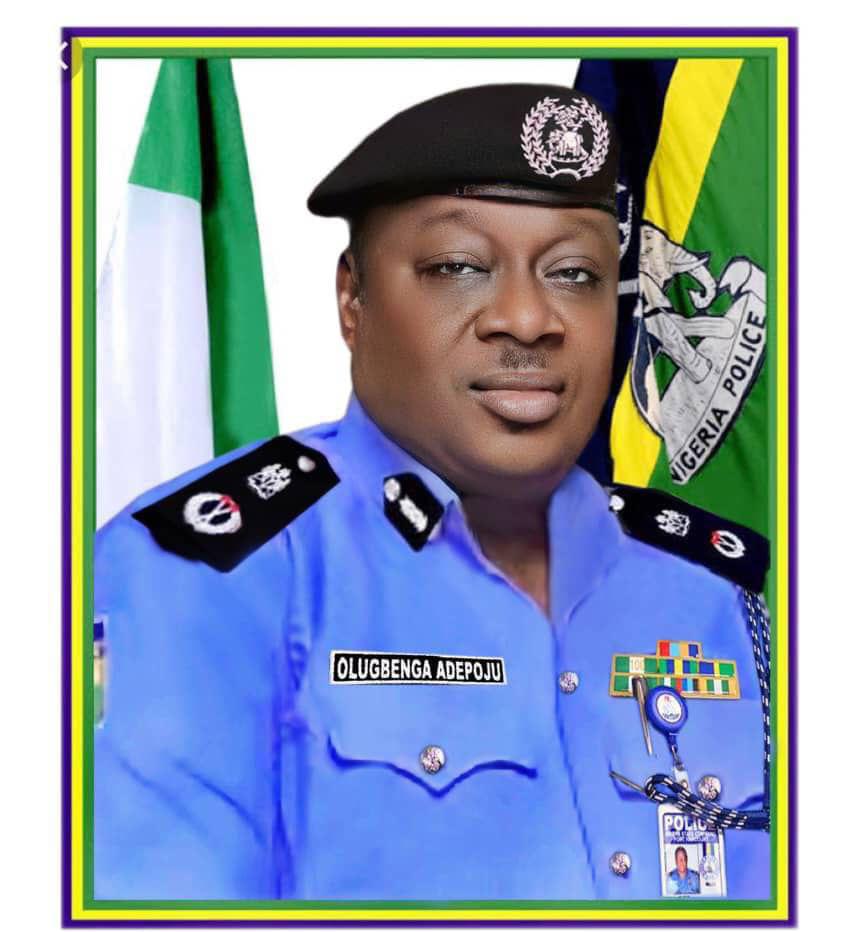
On a routine patrol in Port Harcourt, Rivers State, the Commissioner of Police, CP Adepoju, personally accosted a group of police officers engaged in illegal extortion at an unauthorised checkpoint. The officers were openly collecting money from motorists. When the CP demanded they stop the unlawful activity, the officers insolently instructed him to “shift and do as other motorists were doing” by dropping cash into their collection racketeering points.
It was only after CP Adepoju identified himself that the situation escalated. The Divisional Police Officer (DPO) of the Nkpolu Mile 3 Police Division was immediately summoned to the Rivers State Police Command headquarters on Moscow Road for interrogation and disciplinary action.
Behind the Veil: A Sophisticated Criminal Enterprise in Port Harcourt
While the above incident appears to be an isolated case of rogue officers, it lifts the curtain on a far more entrenched and organised system of extortion that has turned Port Harcourt’s roads into a daily toll gate for commercial drivers. What the public sees as ordinary traffic control is, in reality, a well-coordinated network of “Runs” or “Gang” men operating with impunity at major bus stops across Port Harcourt City and Obio/Akpor Local Government Area.
Modus Operandi of the “Runs” Men
These gangs operate in clearly demarcated territories. Each gang controls specific bus stops and junctions according to its area of dominance. Collection is done twice daily—morning and evening—regardless of whether the driver picks up passengers or not.
- Drivers are forced to pay ₦200 in the morning and another ₦200 in the evening, making a compulsory ₦400 per day per vehicle.
- Upon payment, the gang representative uses a black or red whiteboard marker to inscribe a specific symbol or code on the windscreen or side of the bus as proof of payment.
- The same process is repeated in the evening.
- Failure to pay results in harassment, vehicle impoundment, or physical intimidation.
With hundreds of buses and taxis plying the roads daily, the gangs generate enormous revenue. Simple multiplication (₦400 × hundreds of vehicles) reveals a cash flow that easily runs into millions of naira per day—more than enough to fund logistics, protection, and day-to-day operations of these criminal groups.
Strategic Exceptions to Prevent Gang Wars
The system is not applied blindly. Two notable exceptions exist, showing the highly organised and territorial nature of the gangs:
- Intra-Gang Immunity: A driver who is a registered member of a particular gang is exempted from payment at stops controlled by his own gang. This membership benefit is strictly honoured.
- Rival-Gang Non-Interference: If a driver belonging to Gang A passes through a stop controlled by rival Gang B (for example, at Abali Flyover), the rival gang deliberately ignores him. Harassing him could spark open warfare between the groups.
This “honour among thieves” arrangement keeps the fragile peace between competing gangs while ensuring steady extortion from independent drivers.
The Highway Nightmare: Police Extortion from Owerri to Port Harcourt
The problem does not end within Port Harcourt city limits. For any commercial or private traveller journeying from Owerri, the capital of Imo State, to Port Harcourt, the capital of Rivers State, along the Federal highway, the ordeal begins long before reaching the city.
The entire stretch is littered with over 22 police security checkpoints manned by officers of the Nigeria Police Force. At every single one of these points, motorists are forced to dole out cash — not as official tolls or fines, but as outright extortion by uniformed law enforcement personnel. No official receipts are ever issued. No genuine vehicle or cargo inspection is conducted. The sole objective is illegal money collection.
Travellers describe the experience as deeply frustrating and time-wasting: vehicles are held up for several minutes, sometimes up to half an hour, while officers negotiate and collect their “dues.” Actual security checks — looking for contraband, verifying documents, or ensuring road safety — are almost non-existent. The only thing inspected is the driver’s willingness and ability to pay.
The worst stretch occurs at the Imo-Rivers boundary, beginning from Umuapu in Ohaji/Egbema Local Government Area of Imo State, through Omeruelu town in Ikwerre Local Government Area, and continuing into Obio/Akpor Local Government Area and Port Harcourt City Local Government Area in Rivers State. In this short boundary corridor alone, travellers encounter over 18 police checkpoints in extremely close succession — sometimes less than 500 metres apart. Each point demands fresh payment. The cumulative effect turns what should be a three-hour journey into a six- or seven-hour ordeal, with drivers and passengers exhausted, frustrated, and financially drained before they even enter the city proper.
This highway extortion directly inflates the cost of transportation for both commercial buses and private vehicles, adding hundreds — sometimes thousands — of naira per trip that never reach government coffers.
Public Knowledge and Combined Impact
Both the urban “Runs” gangs and the highway police checkpoints operate in broad daylight. Every regular commuter, bus driver, and private motorist knows the routine. Passengers in buses and taxis witness the marker signs in the city and the endless cash handovers on the highway. The two systems feed each other: drivers who survive the 22+ police checkpoints on the way in are immediately hit by the gang levies inside Port Harcourt.
The result is a double-layered burden — police extortion on the inter-state Federal highway and gang racketeering within the city — that has turned road travel between Owerri and Port Harcourt into one of the most expensive and humiliating experiences in the region.
Conclusion and Urgent Recommendation
The confrontation involving CP Adepoju is not merely about a few errant officers; it is symptomatic of a deeply rooted criminal ecosystem that has hijacked both the highways and the urban roads of Rivers and Imo States. What began as police misconduct has evolved into a parallel economy controlled by both rogue officers and organised gangs operating side-by-side with law enforcement.
Immediate and decisive action is required at two levels:
- Highway level — dismantle the illegal checkpoints, especially the cluster at the Umuapu–Omeruelu–Obio/Akpor corridor, through joint task force operations and installation of CCTV-monitored genuine security points.
- Urban level — sustained raids on gang collection points, intelligence-led arrests of “Runs” leaders, and protection for drivers who refuse to pay.
Public awareness campaigns, reward systems for whistle-blowers, and strict enforcement of receipt-issuance rules must accompany these measures. Until these illegal tolls — both police and gang — are eradicated, the roads between Owerri and Port Harcourt, and within Rivers State itself, will remain unsafe — not from traffic violations or criminals, but from the very hands meant to protect travellers.
The people of Imo and Rivers States deserve safe, dignified, and affordable road travel. The time for cosmetic patrols is over; the time for total eradication of this extortion empire has come.
End of Report
Port Harcourt / Owerri Corridor
March 2026
— Emeka Amaefula Jp, journalist,writer,author and Poet, Public Affairs Analyst, Publisher/Editor-In-Chief THE EAR WITNESS news and Bureau Chief (Rivers State) City People magazine Lagos Nigeria
—–Emeka Amaefula —+234(0)8111813069—