

AFRICOM COMMANDER MEETS TINUBU AS U.S. REPOSITIONS STRATEGY IN WEST AFRICA
By Emeka Amaefula
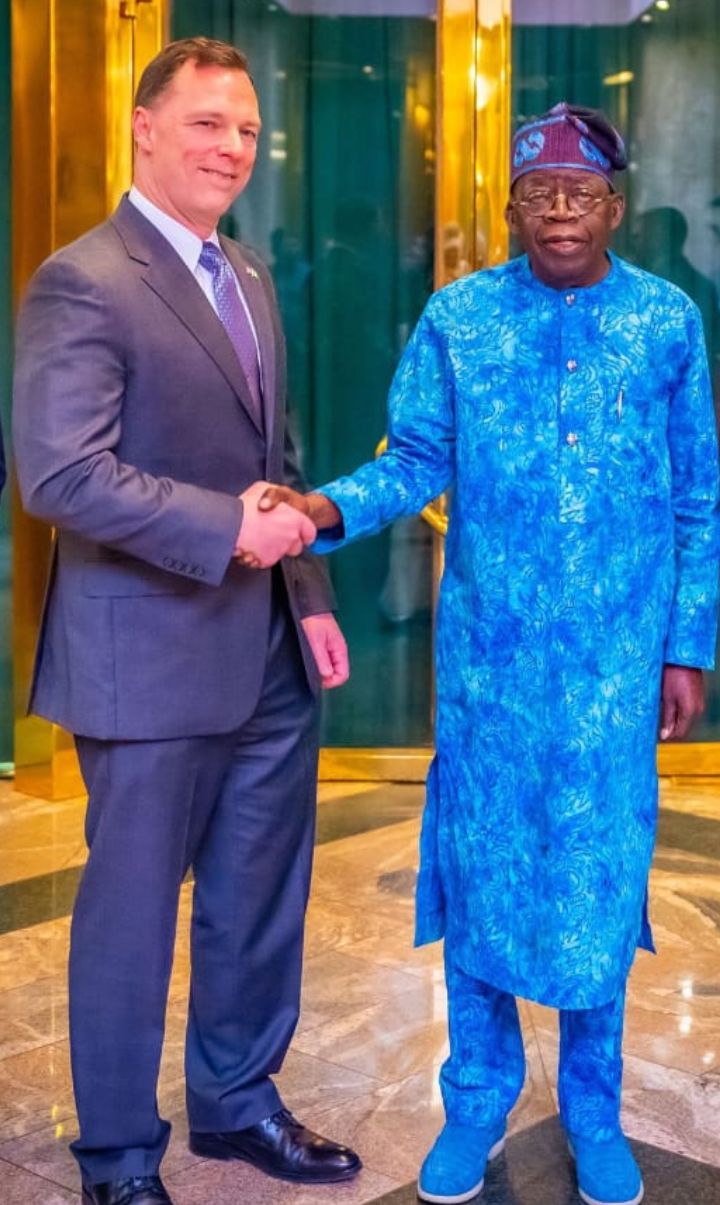
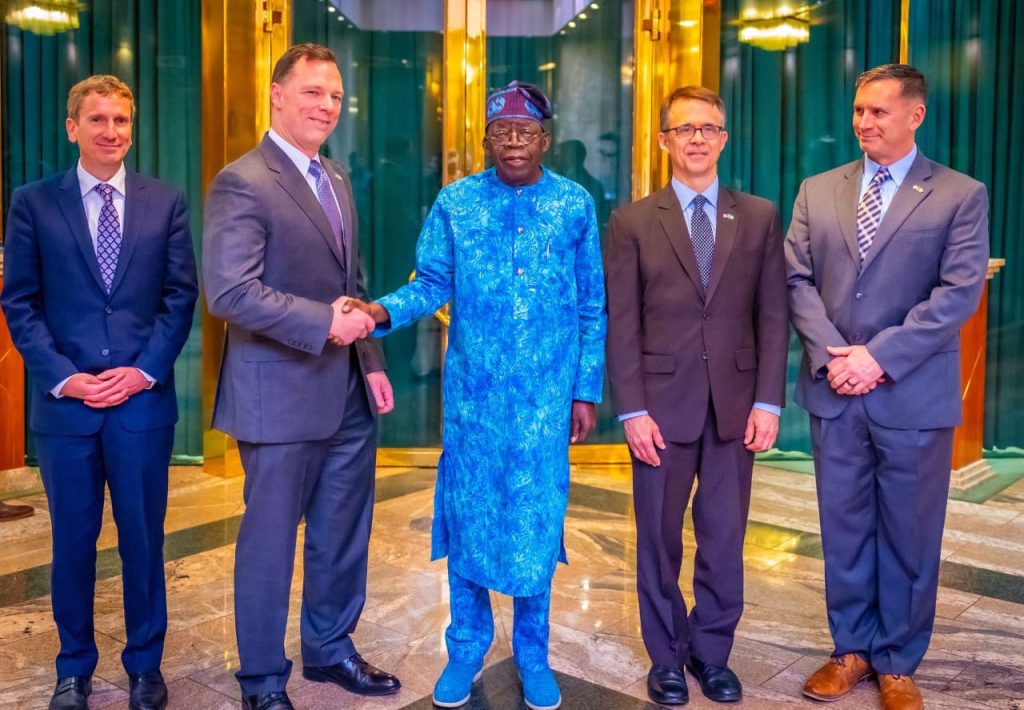
The visit of the Commander of the United States Africa Command (AFRICOM), General Dagvin R. M. Anderson, to President Bola Ahmed Tinubu in Abuja on Sunday signals more than a routine diplomatic courtesy; it reflects Washington’s recalibrated security posture in West Africa and Nigeria’s rising strategic weight amid shifting global alignments.
General Anderson led a high-powered U.S. delegation to the Presidential Villa at a moment when the United States is reassessing its military and diplomatic footprint across the Sahel following the exit or downsizing of Western forces in parts of Mali, Burkina Faso, and Niger. With military juntas tightening their grip in the region and expanding security ties with non-Western powers, Nigeria has increasingly emerged as the pivotal democratic and military counterweight in West Africa.
The delegation included the Charge d’Affaires of the U.S. Embassy in Nigeria, Mr. Keith Heffern; AFRICOM’s Senior Foreign Policy Adviser, Ambassador Peter Vrooman; and the Command Sergeant Major and Command Senior Enlisted Leader, Garric M. Banfield. Their presence underscored Washington’s intent to engage Abuja not merely as a bilateral partner, but as a central pillar in a broader regional security architecture.
President Tinubu’s meeting with the AFRICOM leadership was matched by an equally formidable Nigerian delegation comprising the National Security Adviser, Mallam Nuhu Ribadu; Minister of Defence, General Christopher Musa (Rtd); Chief of Defence Staff, General Olufemi Oluyede; Chief of Army Staff, Lieutenant-General Waidi Shaibu; Chief of Defence Intelligence, Lieutenant-General Emmanuel Uandiandeye; Director-General of the National Intelligence Agency, Mohammed Mohammed; and Director-General of the Department of State Services, Mr. Tosin Ajayi. The composition of the Nigerian team highlighted the seriousness with which Abuja views evolving regional threats and the necessity of strategic coordination.
Although details of the closed-door discussions were not disclosed, the talks are understood to have focused on counter-terrorism cooperation, intelligence sharing, maritime security in the Gulf of Guinea, and Nigeria’s stabilizing role in a region grappling with insurgency, transnational crime, and geopolitical fragmentation. The engagement also comes against the backdrop of growing competition for influence in Africa, where global powers are increasingly courting key states through security partnerships and defense cooperation.
For Nigeria, the meeting reinforces its position as a frontline state in the struggle to contain insecurity spilling southwards from the Sahel, while for the United States, it signals a strategic pivot toward working more closely with trusted regional actors rather than relying on large troop deployments. The Abuja talks therefore point to a future security framework built on partnership, intelligence-driven operations, and regional leadership, with Nigeria at its core.
General Anderson’s visit, coming at a time of flux in West African geopolitics, illustrates how Abuja and Washington are quietly redefining their security relationship—less as patron and partner, and more as strategic equals navigating an increasingly contested African theatre.
——–Emeka Amaefula —–+234(0)8111813069—