

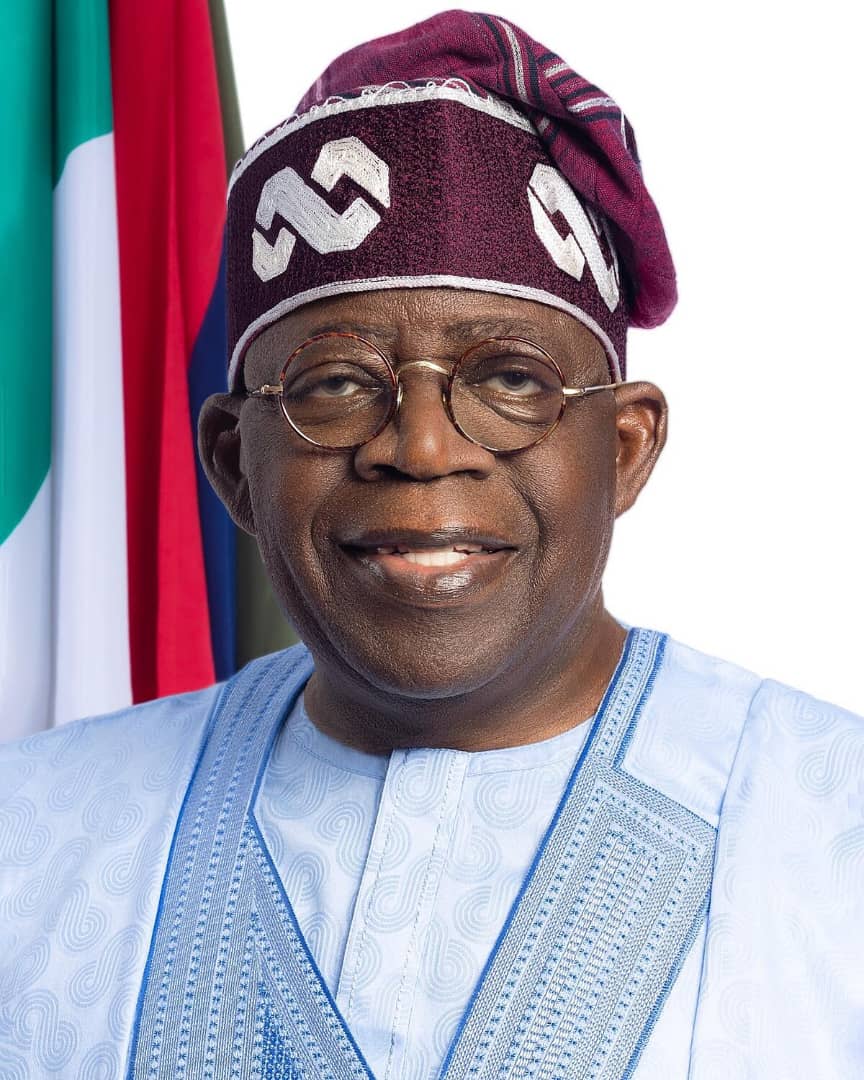

RIVERS STATE 2027 GOVERNORSHIP: SCENARIO MODELS AND POWER DYNAMICS
By Emeka Amaefula
As Rivers State moves steadily toward the 2027 governorship election, three dominant political forces shape the emerging landscape: Governor Sir Siminalayi Fubara’s bid for continuity, the enduring grassroots dominance of Minister Nyesom Ezenwo Wike’s Renewed Hope political family, and the strategic posture of the All Progressives Congress (APC) at both national and state levels. The interaction among these forces suggests three plausible scenarios—best-case, worst-case, and most-likely outcomes—each with distinct implications for Rivers politics and President Bola Ahmed Tinubu’s re-election architecture.
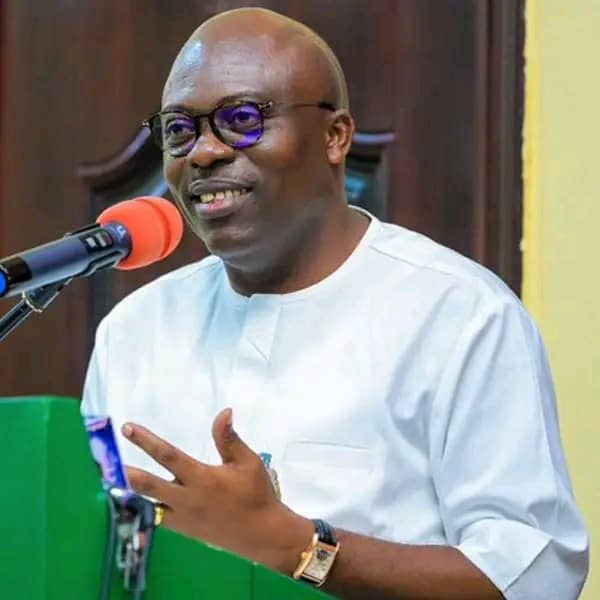
Best-Case Scenario for Fubara (High Consolidation Model)
In this scenario, Governor Fubara successfully converts his national visibility into state-level dominance. His inclusion in the APC Central Coordination Committee becomes a gateway to deeper acceptance within the party’s national hierarchy, leading to federal backing, strategic funding, and subtle intervention to stabilize Rivers APC structures. Through negotiation and selective accommodation, Fubara gradually neutralizes internal resistance, bringing critical blocs of the APC—especially those aligned with Chief Tony Okocha—into a unified command structure.
Crucially, this outcome depends on Wike choosing containment over confrontation.
If the Renewed Hope political family prioritizes President Tinubu’s re-election and decides that political stability in Rivers serves broader national interests, Wike may refrain from sponsoring a rival governorship candidate. In this case, Renewal Hope structures could be redirected toward mobilization for Tinubu while tacitly tolerating Fubara’s second-term ambition. Under this model, Fubara emerges as the APC flag bearer with limited resistance, benefiting from incumbency, federal alignment, and a fragmented opposition.

Worst-Case Scenario for Fubara (Fragmentation and Replacement Model)
This scenario represents the most destabilizing pathway. Here, Wike fully activates his grassroots machinery to replace Fubara politically, driven by unresolved power struggles, loyalty realignments, and strategic recalibration ahead of 2027.
Under this model, Wike leverages the Renewed Hope political family to field Alabo Barr. Boma Iyaye, the current Director of Finance and Administration at the NDDC, as a governorship candidate—not within the APC controlled by Fubara’s faction, but under a different political party yet to be publicly declared.
Iyaye’s emergence as an Eastern Ijaw candidate fundamentally alters the political equation. Ethnic balancing becomes a powerful mobilizing tool, allowing Wike to frame the contest as a generational and regional realignment rather than a simple party contest. With Renewal Hope structures deeply embedded at ward and community levels, Iyaye’s candidacy could attract defectors from multiple parties, weakening APC cohesion and isolating Fubara within a formal structure lacking grassroots energy.
In this worst-case scenario, APC enters the election divided, Fubara contests either a hostile primary or a weakened general election, and Rivers politics becomes a proxy battlefield for supremacy between incumbency power and grassroots loyalty. Even if Fubara retains the APC ticket, the party risks losing control of the state to a Wike-backed alternative platform.
Most-Likely Scenario (Managed Rivalry and Parallel Mobilization)
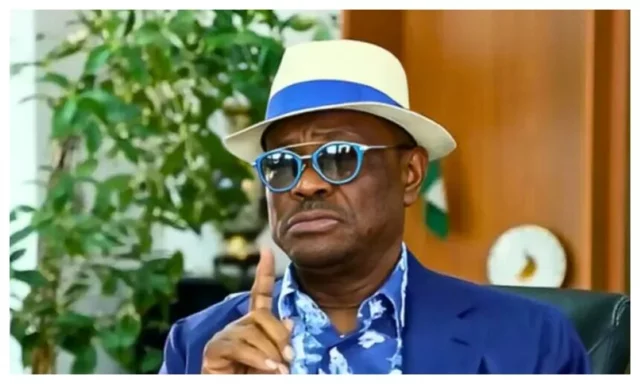
The most realistic outcome lies between these extremes. In this model, neither Fubara nor Wike achieves total dominance. Instead, Rivers State witnesses parallel political mobilization: Fubara consolidates national legitimacy and formal APC structures, while Wike maintains overwhelming grassroots influence through Renewed Hope networks.
Under this arrangement, Wike may delay declaring a governorship proxy—keeping figures like Boma Iyaye politically visible but strategically ambiguous—while assessing Fubara’s capacity to deliver Rivers State for President Tinubu in 2027. This ambiguity itself becomes leverage. Fubara, aware of this threat, intensifies grassroots outreach, governance visibility, and intra-party negotiations to avoid open confrontation.
The APC, at the national level, may tolerate this uneasy balance so long as Rivers remains aligned with the Tinubu re-election project. In effect, Rivers politics becomes transactional: loyalty to the Renewed Hope Agenda takes precedence over strict party orthodoxy. The governorship contest, in this scenario, is ultimately decided by late-stage alliances, elite bargaining, and the direction Wike chooses once national electoral priorities become clearer.
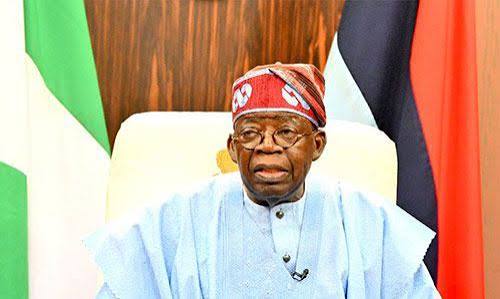
Strategic Implications
Across all scenarios, one reality is constant: party labels alone will not determine the 2027 outcome in Rivers State. The decisive factor will be control of grassroots networks, ethnic coalition-building, and alignment with the Renewed Hope political family anchored in President Tinubu’s re-election agenda. Governor Fubara’s national prominence gives him leverage, but not insulation. Wike’s influence gives him options, but not absolute certainty.
Rivers State, therefore, is shaping up not merely as a gubernatorial contest, but as a test case of how political families, incumbency, and national power intersect in Nigeria’s evolving party system.
———Emeka Amaefula —–+234(0)8111813069—–